Quick Answer: Glass dildos made from borosilicate glass are generally safe for vaginal use when handled carefully. However, for anal play, the risk profile changes significantly — glass cannot flex with the body, offers no give on impact, and any crack or chip becomes a serious injury hazard. For users who want the firmness and fullness of a rigid toy without the fragility risk, platinum-cured silicone — especially dual-density construction — delivers comparable pressure and superior safety.
The Reddit thread that sent you here probably looked something like this: someone asks "are glass dildos good," and the answers split immediately. Half the comments say glass is incredible for temperature play and G-spot pressure. The other half mention a friend-of-a-friend horror story. Both sides are telling the truth.
Glass dildos occupy a genuinely interesting space in the toy market. They're beautiful, non-porous, and the firmness creates a kind of direct, unmediated pressure that softer materials can't replicate. But "safe" is a more complicated answer than most product pages will give you — and it depends heavily on how you're using it and where.
This guide covers what glass actually does well, where it falls short, and why a growing number of experienced buyers are moving toward platinum silicone for the same sensation profile — without the fragility trade-off.
What Glass Dildos Actually Are (And Aren't)

The glass used in quality sex toys is borosilicate glass — the same material used in laboratory equipment and high-end cookware. It's not the same as window glass or cheap decorative glass. Borosilicate is significantly more resistant to thermal shock, meaning it won't shatter when you move it from cold water to warm.
That said, "more resistant" is not the same as "unbreakable." Borosilicate glass can and does chip, crack, and break — particularly under lateral stress, impact, or if it's dropped on a hard surface. A hairline crack that's invisible to the naked eye is enough to create a sharp edge inside the body.
This is the foundational tension with glass toys: the properties that make them appealing (rigidity, smoothness, density) are inseparable from the properties that create risk.
The Real Advantages of Glass — Stated Honestly
Temperature Play
Glass conducts and holds temperature better than almost any other toy material. Run it under warm water for two minutes and it stays warm throughout a session. Place it in the refrigerator for fifteen minutes and the cool sensation is immediate and sustained. For users who find temperature contrast genuinely arousing, glass delivers this in a way that silicone — which insulates rather than conducts — simply doesn't match at the same speed.
Firmness and Pressure
Glass has zero give. When you apply pressure with a glass toy, 100% of that force transfers directly to the tissue. For G-spot or P-spot stimulation, this mechanical directness is the point — a curved glass toy pressed against the anterior wall creates a very specific, localized pressure that many users find more effective than softer materials.
Hygiene
Glass is non-porous. It can be sterilized in boiling water, run through a dishwasher (top rack, no heated dry), or wiped down with a 10% bleach solution. For users who prioritize hygiene above everything else, glass is genuinely excellent in this regard — comparable to stainless steel, and better than any porous material.
Aesthetics
This matters more than it sounds. Glass toys are often genuinely beautiful objects — hand-sculpted, translucent, sometimes with internal color gradients or fantasy designs. The visual element of a toy affects how you feel about using it, and glass has a distinct aesthetic that no other material replicates.

A good example of what glass does well aesthetically: the Domlust Crystal Fantasy Glass Dildo ($49.80) — a fantasy fish-inspired design with a smooth, translucent finish that's genuinely striking. It's well-made borosilicate, easy to clean, and the curved profile works for G-spot targeting. It also illustrates the trade-off clearly: beautiful, functional for vaginal use, but the rigidity that makes it effective is the same property that makes anal use higher-risk.
Where Glass Becomes a Problem
Anal Play: The Risk Is Structural, Not Just About Breakage
The anal canal has a different mechanical relationship with rigid objects than the vaginal canal does. The rectum curves — it's not a straight channel — and it responds to pressure by contracting. A rigid toy that doesn't flex with those contractions creates point-load stress on tissue rather than distributing pressure evenly.
This isn't a theoretical concern. The combination of zero flex, high density, and the body's natural muscular response means that glass anal toys require a level of control and experience that most buyers underestimate. A sudden contraction, an awkward angle, or a moment of distraction can result in bruising or tearing that a flexible toy would have avoided entirely.
Add to this the crack risk: any structural compromise in a glass toy used anally is a medical emergency, not a minor inconvenience. The rectum has no natural exit mechanism for foreign objects or fragments.
Inspection Fatigue
Every responsible glass toy guide will tell you to inspect your toy before every use — hold it up to a light source, run your fingers along the surface, check for chips at the base and tip. This is correct advice. It's also advice that most people stop following after the first few uses. The risk isn't that glass is inherently dangerous; it's that the maintenance of safe glass use requires consistent attention that's easy to let slip.
Drop Risk
Glass is heavy and slippery when lubricated. Dropping a glass toy on tile or hardwood — which happens — can create invisible micro-fractures even if the toy appears intact. Unlike silicone, which you can drop, step on, and throw across a room without consequence, glass requires careful handling throughout its entire lifespan.
Glass vs. Stainless Steel vs. Platinum Silicone: The Honest Comparison
| Property | Glass | Stainless Steel | Platinum Silicone |
|---|---|---|---|
| Firmness | Rigid, zero flex | Rigid, zero flex | Firm core, surface give (dual-density) |
| Temperature Play | Excellent — conducts fast, holds well | Excellent — conducts faster than glass | Moderate — warms to body temp, doesn't conduct |
| Breakage / Damage Risk | Chips, cracks on impact | Essentially indestructible | Tear-resistant, no sharp failure mode |
| Anal Safety | Higher risk — no flex, crack hazard | Moderate — no flex, but no crack risk | Best — flexes with body, no sharp edges |
| Fullness / Stretch Sensation | High — rigid creates maximum stretch | High — same mechanism | High — dual-density gives firm core with skin-like surface |
| Hygiene | Non-porous, sterilizable | Non-porous, sterilizable | Non-porous, sterilizable |
| Maintenance | Inspect before every use | Minimal | Minimal |
| Lube Compatibility | Water-based or silicone-based | Water-based or silicone-based | Water-based only |
Stainless steel is the honest upgrade from glass if rigidity and temperature play are your primary criteria — it delivers the same mechanical properties without any crack risk. But for most buyers, the real question isn't "glass or steel." It's "rigid or not rigid," and that's where platinum silicone's dual-density construction changes the conversation.
Why Experienced Buyers Move Toward Dual-Density Platinum Silicone

The appeal of glass is ultimately about pressure — the feeling of something firm, dense, and unyielding that creates a specific kind of fullness and internal contact. That sensation is real, and it's why glass has a loyal following.
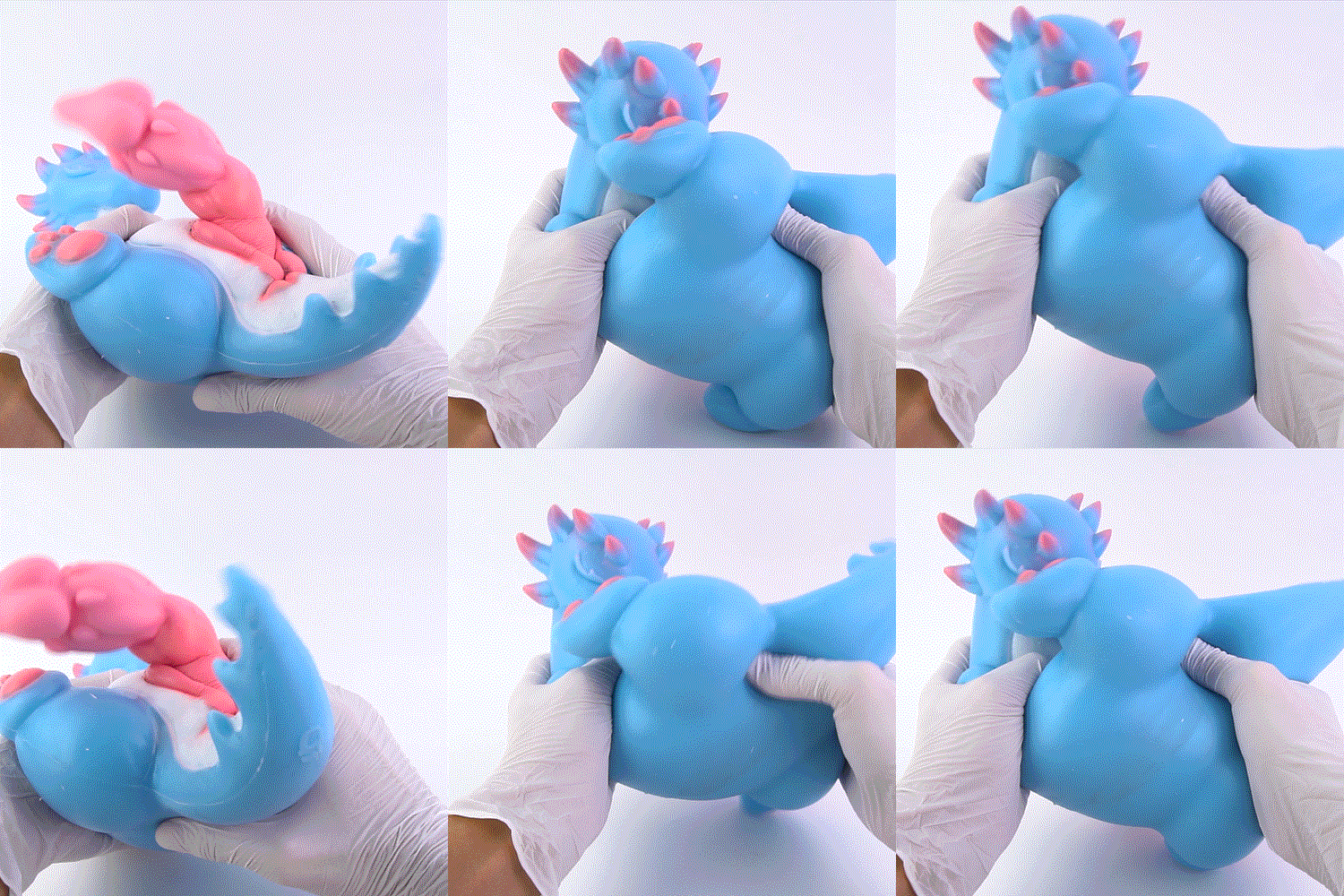
What dual-density platinum silicone dildo does is separate the structural firmness from the surface rigidity. The inner core is firm enough to maintain shape and create genuine pressure during use. The outer layer is soft enough to conform slightly to the body's contours, distribute force more evenly, and eliminate the point-load stress that makes rigid toys higher-risk for anal play.
The result is a toy that creates the sensation of fullness and pressure — the thing glass users are actually after — without the failure modes that come with a material that can crack, chip, or refuse to flex at a critical moment.
Beyond the structural argument, platinum-cured silicone is body-safe at a chemical level. It contains no plasticizers, no phthalates, and no mineral oils. It doesn't off-gas. It doesn't degrade. A quality platinum silicone toy used and stored correctly will outlast any glass toy by years.
A concrete example of what this looks like in practice: the Domlust Fantasy Tentacle Platinum Silicone Dildo ($46.20). The spiral ridge structure along the shaft creates layered friction as it moves — the kind of shifting, angle-dependent sensation that glass users describe when they talk about "feeling every millimeter." The anchor base makes it genuinely anal-safe. The platinum silicone flexes with the body's natural contractions rather than fighting them. And unlike glass, you can drop it, use it without pre-inspection anxiety, and store it without worrying about hairline cracks developing over time.
If fullness and internal texture are what you're optimizing for, the Domlust silicone dildos collection is worth exploring — the firm core creates the pressure profile that glass users recognize, while the outer layer handles the body-conforming work that glass physically cannot do.
Practical Glass Dildo Safety: If You're Going to Use One
If you already own a glass toy or the aesthetic genuinely matters to you, here's how to use it as safely as possible:
- Inspect before every single use. Hold it under a bright light and rotate it slowly. Run your fingertip along the entire surface, including the base. Any roughness, chip, or visible crack means the toy is retired — not repaired, retired.
- Store it wrapped. Glass toys should be stored in a padded pouch or the original box, never loose in a drawer where they can knock against other objects.
- Use it for vaginal play or external stimulation. The risk profile for anal use is meaningfully higher. If you want rigid anal stimulation, stainless steel is the safer rigid option.
- Use generous lubrication. Glass is smooth but unforgiving. Water-based or silicone-based lube both work — glass is compatible with either.
- Never use a glass toy that has been dropped on a hard surface, even if it appears intact.
Frequently Asked Questions
Are glass dildos safe to use?
Quality borosilicate glass dildos are safe for vaginal use when inspected regularly and handled carefully. For anal use, the risk profile is higher because glass cannot flex with the body and any structural damage creates a serious injury hazard. If you want rigid anal stimulation, stainless steel or a firm-core platinum silicone toy is a safer choice.
Can glass dildos break inside you?
A well-made borosilicate glass toy is unlikely to shatter during normal use, but it can develop chips or cracks — particularly if dropped or stored improperly. A cracked toy used internally can cause lacerations. This is why inspection before every use is non-negotiable, and why many experienced users prefer materials with no sharp failure mode.
How do you clean a glass dildo?
Glass is one of the easiest materials to clean. You can boil it for 3–5 minutes, run it through the dishwasher on the top rack (no heated dry cycle), or wash it with warm water and antibacterial soap. Because it's non-porous, surface cleaning is genuinely effective — unlike porous materials where bacteria can survive below the surface.
Can you use silicone lube with a glass dildo?
Yes. Glass is compatible with both water-based and silicone-based lubricants. This is one of the practical advantages over platinum silicone toys, which should only be used with water-based lube to avoid surface degradation.
What's the difference between glass and platinum silicone for anal play?
Glass is rigid and cannot flex — it creates maximum pressure but doesn't adapt to the body's natural contractions. Platinum silicone, especially dual-density construction, provides a firm core for pressure and fullness while the outer layer conforms slightly to body contours. For anal play specifically, the flexibility of silicone significantly reduces the risk of tissue stress and eliminates the crack/chip hazard entirely.
Is glass or steel better for temperature play?
Both are excellent for temperature play. Stainless steel actually conducts temperature faster than glass and holds it just as well. The practical difference is that steel has no breakage risk, making it the more durable choice for users who prioritize temperature sensation above all else.
Are glass dildos good for G-spot stimulation?
Yes — the firmness and curved profiles common in glass toys make them effective for G-spot targeting. The rigid surface transfers pressure directly without any absorption. That said, a firm-core silicone toy with a pronounced curve achieves the same mechanical result with more forgiveness if angle or pressure needs to be adjusted mid-use.
The Bottom Line
Glass dildos are not inherently dangerous, and the people who love them aren't wrong about what they love. The temperature play is real. The pressure is real. The aesthetic is genuinely appealing in a way that no other material quite matches.
But "safe" requires consistent maintenance, careful storage, and an honest assessment of use case. For vaginal use with regular inspection, quality borosilicate glass is a legitimate choice. For anal play, or for anyone who doesn't want to think about their toy's structural integrity before every session, the risk-to-reward calculation shifts.
The sensation that glass users are actually after — firmness, fullness, direct internal pressure — is achievable in platinum silicone without the fragility trade-off. That's not a compromise. It's a material science upgrade.
If you're ready to explore that direction: browse the glass dildo collection if the aesthetic is what draws you, or explore the dual-density platinum silicone range if you want the same pressure profile with a safer material foundation.