
Last updated: May 2026
When people search for "how to make a pocket pussy" or "pocket pussy mold," they're driven by genuine curiosity about materials, molding techniques, and what actually makes a high-quality sleeve feel realistic. This guide explains how pocket pussies are professionally manufactured — the material science, mold engineering, and production process behind a finished product — and why recreating that experience through DIY is far more technically demanding than it appears.
This guide is written from Domlust's direct manufacturing experience. We've been engineering platinum silicone pocket pussies since 2019, iterating through hundreds of mold versions across our realistic, animal, and fantasy product lines.
👉 What Is a Pocket Pussy? Complete Guide → — types, materials, and how to choose.
👉 Domlust Pocket Pussies → — the finished products this process produces.
What Is a Pocket Pussy Made Of? Material Selection

Material selection is the first and most consequential decision in pocket pussy manufacturing. The finished product's feel, safety, lifespan, and cleanability are all determined at this stage.
Platinum-Cured Silicone — The Professional Standard
Professional manufacturers use platinum-cured silicone for one reason: it's the only material that meets all four requirements simultaneously.
| Property | Platinum-Cured Silicone | TPE (Consumer Grade) | DIY Silicone Caulk |
|---|---|---|---|
| Porosity | Non-porous | Porous | Varies — often porous |
| Skin safety | Hypoallergenic, certified body-safe | Varies — phthalates possible | Not body-safe |
| Sterilization | Boilable — fully sterilizable | Cannot be fully sterilized | Cannot be sterilized |
| Odor over time | Odorless throughout lifespan | Develops odor as it degrades | Acetic acid smell, degrades |
| Tear resistance | High — engineered for repeated use | Medium — degrades with use | Low — tears easily |
| Texture retention | Maintains surface detail indefinitely | Surface becomes sticky over time | Surface degrades rapidly |
The platinum catalyst in platinum-cured silicone is what drives the crosslinking reaction that creates a non-porous, stable polymer network. Consumer-grade silicone caulk uses acetic acid or tin-based catalysts — both of which produce inferior crosslinking, residual chemical odor, and surface instability over time.
At Domlust, we use medical-grade platinum-cured silicone across all product lines. The Shore A hardness (a measure of softness) is calibrated differently for different product zones — softer at the exterior for realistic skin feel, slightly firmer at the internal channel walls for structural integrity and texture retention.
👉 Silicone vs TPE — Complete Material Comparison →
Step 1: Internal Architecture Design

The internal channel is not a hollow tube. It's an engineered structure where every geometric decision affects the final sensation. Professional internal architecture design considers:
- Pressure distribution: How pressure is distributed along the shaft during a full stroke. Uniform pressure feels artificial; varied pressure at specific anatomical points feels realistic.
- Texture sequencing: The order and spacing of ribs, nodes, and chambers along the channel length. Texture elements that are too close together create overstimulation; too far apart creates dead zones.
- Elastic recovery: How quickly the channel returns to its resting shape after compression. Slow recovery creates a suction effect; fast recovery creates a gripping effect. Both are engineered deliberately.
- Airflow and vacuum balance: Closed-ended designs create vacuum pressure that builds during use. The channel geometry determines how that pressure builds and releases — which directly affects the sensation profile.
- Entry geometry: The shape and tightness of the entry point. This is the highest-nerve-density contact point and receives the most design attention in realistic products.
At Domlust, internal architecture goes through a minimum of 12–18 prototype iterations before a mold is approved for production. Each iteration is physically tested, not just modeled. Minor changes in channel diameter (as small as 0.5mm) produce measurable differences in the finished product's sensation profile.
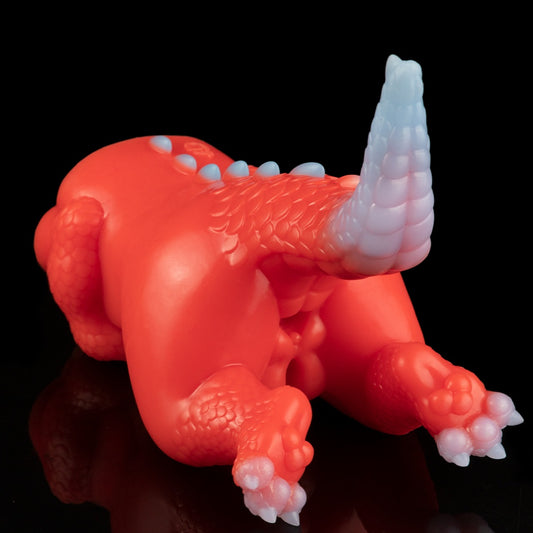
Fantasy and animal designs present additional complexity: the external aesthetic must be integrated with the internal channel geometry without compromising either. A dragon sleeve's external scale pattern, for example, cannot be so deep that it creates thin walls at the internal channel — which would cause tearing under use pressure.
Step 2: Pocket Pussy Mold Creation and Engineering
What is a pocket pussy mold?
A pocket pussy mold is a multi-part negative impression of the product design, made from aluminum or steel, used to shape liquid platinum-cured silicone into the finished sleeve. Professional molds are CNC-machined to ±0.1mm tolerance and reusable for thousands of production cycles — unlike DIY molds made from plaster or consumer silicone, which degrade after 5–20 uses and lose dimensional accuracy rapidly.
This is the stage that most DIY attempts fail to replicate. Mold engineering is where the design becomes a physical production tool — and the precision requirements are significantly higher than most people expect.

Master Model Creation
The process begins with a master model — a physical prototype that will be used to create the production mold. Master models are typically created through one of three methods:
- CNC machining: For geometric precision in internal channel cores. CNC-machined cores hold tolerances of ±0.1mm, which is necessary for consistent channel diameter across production batches.
- 3D printing + hand finishing: For complex external textures (scales, skin detail, creature anatomy). 3D printing captures the overall geometry; hand finishing refines surface texture to the level of detail that silicone will capture.
- Hand sculpting: For organic, anatomical designs where the goal is biological realism rather than geometric precision. Domlust's realistic pocket pussy line uses hand-sculpted masters for the external labia detail.
Mold Making
The master model is encased in a molding material to create a negative impression. Professional molds use:
- Multi-part mold systems: A single-piece mold cannot release a product with undercuts (recessed areas). Realistic and fantasy designs require 2–4 part molds that separate along carefully engineered parting lines.
- Parting line placement: Parting lines must be placed where they won't create visible seams on the finished product's functional surfaces. For internal channels, this means placing parting lines at the channel's neutral axis — where they create the least friction during use.
- Vent placement: Air must escape the mold as silicone is poured. Vent placement determines whether air bubbles form in the finished product. Bubbles in the internal channel wall create weak points that tear under use pressure.
A single production mold for a complex pocket pussy design can take 3–6 weeks to engineer and fabricate. Industrial molds are made from aluminum or steel and are reusable for thousands of production cycles. DIY molds made from plaster or consumer silicone degrade after 5–20 uses and lose dimensional accuracy rapidly.
Step 3: Silicone Pouring and Curing

Once the mold is prepared, silicone pouring begins. This stage has more failure points than any other in the manufacturing process.
Mixing and Degassing
Platinum-cured silicone is a two-part system: a base compound and a catalyst. The mixing ratio must be precise — typically 1:1 or 10:1 by weight depending on the formulation. Deviation of more than 2–3% from the correct ratio produces a product that either doesn't cure fully (remains tacky) or cures too hard (loses the softness that makes it feel realistic).
After mixing, the silicone must be degassed — placed in a vacuum chamber to remove air bubbles introduced during mixing. Skipping degassing produces a finished product with visible and tactile surface bubbles. In the internal channel, these bubbles become stress concentration points that initiate tearing.
Multi-Layer Pouring
High-end pocket pussies use multi-layer silicone pouring — different Shore A hardness formulations poured in sequence to create a product with varied softness zones:
- Outer skin layer: softest formulation, typically Shore A 5–10, for realistic surface feel
- Structural layer: medium formulation, Shore A 15–25, for shape retention and tear resistance
- Internal channel layer: calibrated formulation for the specific texture and grip profile of that design
Single-material DIY pours cannot replicate this — the result is a product that's either too soft (collapses during use) or too firm (feels artificial).
Curing
Platinum-cured silicone cures at room temperature over 24–48 hours, or faster at elevated temperatures (60–80°C). Rushing the cure by using excessive heat produces a product with reduced tear strength. Insufficient cure time produces a product that remains slightly tacky and has reduced surface stability.
Step 4: Demolding, Finishing, and Quality Control
After curing, the silicone cast is carefully removed from the mold. The demolding process itself requires skill — aggressive demolding tears thin-walled sections, particularly at the internal channel entry point where wall thickness is lowest.
Post-demolding finishing at Domlust includes:
- Seam trimming: Parting line flash (thin silicone fins at mold seams) is trimmed by hand. Machine trimming cannot navigate the complex geometry of fantasy and animal designs without damaging surface texture.
- Airbrushing: Realistic and animal designs are hand-airbrushed with body-safe pigments to add color variation — skin tone gradients, vein detail, anatomical color variation. This is done by hand for each unit.
- Surface inspection: Each unit is inspected for bubbles, tears, incomplete texture capture, and dimensional accuracy. Units that don't meet specification are rejected.
- Stretch testing: Internal channels are stretch-tested to verify tear resistance before shipping.
Why DIY Pocket Pussies Fail — The Specific Failure Points
DIY pocket pussy attempts are common — the search volume for "how to make a pocket pussy" and "pocket pussy mold" confirms this. Most fail for specific, predictable reasons:
- Wrong silicone: Consumer silicone caulk (the most common DIY material) uses acetic acid or tin catalysts. These produce a porous, odorous product that cannot be sterilized and degrades within weeks of use. It is not body-safe for repeated internal contact.
- No degassing: Without a vacuum chamber, air bubbles are unavoidable. The finished product has a rough, porous internal surface that creates friction rather than smooth stimulation.
- Single-material pour: A single Shore A hardness throughout the product means it's either too soft to hold shape or too firm to feel realistic. The multi-layer construction that creates realistic feel requires multiple formulations and sequential pouring.
- Mold imprecision: DIY molds made from plaster, foam, or consumer silicone cannot hold the dimensional tolerances required for consistent internal channel geometry. The result is a product that feels different from the intended design.
- No texture engineering: Internal texture in DIY products is typically accidental rather than engineered. The specific pressure distribution and elastic recovery that makes a professional product feel realistic requires deliberate design — not improvisation.
"The inner texture felt way better than I expected — those ridges hit just right. Definitely more than a simple sleeve." — Alex, verified Domlust customer
Domlust's 2026 Design Direction
As part of our ongoing product development, we are currently in the early mold and design phase for larger fantasy-inspired product lines, including advanced fantasy sex dolls. These designs present unique engineering challenges that don't exist at pocket pussy scale:
- Structural support at larger scales — silicone at larger volumes requires internal armatures or density gradients to prevent collapse under its own weight
- Weight distribution — larger products must be balanced for practical use, which affects where structural material is concentrated
- Multi-zone softness control — different body zones require different Shore A hardness, requiring more complex multi-layer pouring sequences
- Long-term material stability — larger silicone volumes are more susceptible to thermal expansion and contraction, which affects dimensional stability over time
Rather than rushing to market, these products remain in the concept and mold-testing stage, where realism and durability are prioritized above all else.
Frequently Asked Questions
How is a pocket pussy made professionally?
A professional pocket pussy is made in four steps: (1) internal channel architecture design — engineering texture sequencing, pressure distribution, and elastic recovery; (2) mold creation — CNC-machined or hand-sculpted master model converted to a multi-part aluminum or steel mold; (3) platinum-cured silicone pouring — degassed, mixed at precise ratios, poured in multiple Shore A hardness layers, and cured over 24–48 hours; (4) demolding and finishing — hand trimming, airbrushing, surface inspection, and stretch testing.
Is it safe to make your own pocket pussy?
No — not with consumer-available materials. Consumer silicone caulk is not body-safe for repeated internal contact. It's porous (absorbs bacteria), contains residual acetic acid or tin compounds, and cannot be sterilized. DIY attempts with these materials carry real hygiene and chemical exposure risks.
What silicone is used in professional pocket pussies?
Platinum-cured silicone — specifically formulated for body contact applications. The platinum catalyst produces a fully crosslinked, non-porous polymer network that is hypoallergenic, odorless, and boilable. Shore A hardness varies by product zone, typically ranging from Shore A 5 (exterior skin layer) to Shore A 20–25 (structural layer).
What is a pocket pussy mold and how is it made?
A pocket pussy mold is a multi-part negative impression of the product design, used to shape liquid silicone into the finished product. Professional molds are made from aluminum or steel using CNC machining, with parting lines engineered to avoid seams on functional surfaces. A single mold for a complex design takes 3–6 weeks to fabricate and costs significantly more than the consumer price of the finished product.
Are pocket pussy molds reusable?
Industrial aluminum and steel molds are reusable for thousands of production cycles with minimal dimensional change. DIY molds made from plaster or consumer silicone typically degrade after 5–20 uses, losing surface detail and dimensional accuracy rapidly.
Why do professional pocket pussies feel more realistic than DIY versions?
Four reasons: material (platinum silicone vs consumer alternatives), internal architecture (engineered texture sequencing vs accidental geometry), multi-layer construction (varied Shore A hardness zones vs single-material pour), and quality control (physical testing of each unit vs no testing). Each factor contributes independently; the combination produces a qualitative difference that DIY cannot replicate.
How long does it take to make a pocket pussy professionally?
The design and mold engineering phase takes 4–10 weeks for a new design. Production of a single unit (pouring, curing, demolding, finishing, inspection) takes approximately 48–72 hours. This is why professional products cost what they do — the time investment per unit is significant even at production scale.
Experience the Difference
Understanding how a pocket pussy is made offers direct insight into why craftsmanship matters — and why the price difference between a platinum silicone product and a cheap TPE alternative reflects a real difference in material science, engineering, and production time.
"I've tried cheaper ones before, but Domlust's silicone models actually feel real. Worth every penny." — Jordan, verified customer
👉 Shop All Domlust Pocket Pussies → — the finished products this process produces.
👉 Animal Pocket Pussies → — fantasy and creature designs in platinum silicone.
👉 Alien & Fantasy Pocket Pussies →