
Last updated: May 2026
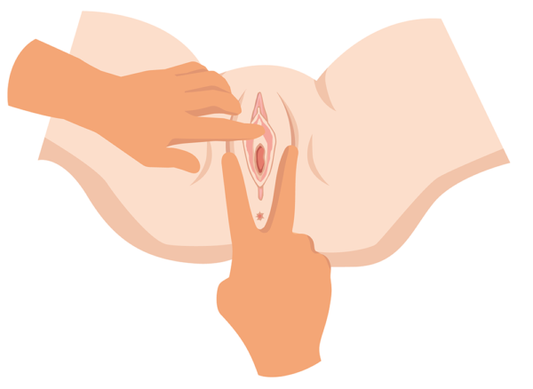
What is a VCH piercing? A VCH piercing (Vertical Clitoral Hood piercing) is a genital piercing that passes vertically through the clitoral hood — the fold of skin that covers and protects the clitoris. A curved barbell sits with one bead resting on top of the hood and the other beneath it, in direct contact with the clitoris. Because of this placement, the VCH piercing provides constant gentle stimulation during movement and sexual activity. It is one of the most popular female genital piercings due to its relatively fast healing time (4–8 weeks), low pain level, and erotic benefits.
VCH Piercing Guide: Everything You Need to Know
The Vertical Clitoral Hood (VCH) piercing is one of the most popular and erotically stimulating genital piercings available today. Known for its aesthetic appeal, quick healing time, and heightened sexual sensitivity, it has become a choice for many who are curious about both body modification and sexual pleasure.

In this guide, we'll explore everything you need to know about the VCH piercing — from anatomy and procedure to healing, jewelry safety, toy compatibility, and potential risks — so you can make an informed, body-positive decision.
Table of Contents
- What Is a VCH Piercing?
- VCH vs HCH: What's the Difference?
- Is Your Anatomy Suitable?
- Pain Level: What to Expect
- The Piercing Process
- VCH Piercing Healing Timeline
- Aftercare
- Jewelry: Sizes, Materials & Styles
- How Much Does a VCH Piercing Cost?
- Potential Risks & Complications
- Toy Compatibility & Sexual Play
- FAQ
What Exactly Is a VCH Piercing?
The VCH piercing goes vertically through the clitoral hood (the fold of skin covering the clitoris), placing jewelry that gently stimulates the clitoris during movement. This placement means the jewelry sits directly where natural friction occurs — providing constant stimulation during walking, sitting, or sexual activity.

For many, this piercing is both visually striking and erotically rewarding. With the right anatomy, a VCH piercing can:
- Enhance sensation during everyday movement and sexual activity
- Accentuate appearance, adding a subtle but powerful aesthetic touch
- Symbolize empowerment, giving wearers a deeply personal connection to their sexuality
VCH vs HCH: What's the Difference?
Two common clitoral hood piercings are often confused. Here's how they compare:
| Feature | VCH (Vertical Clitoral Hood) | HCH (Horizontal Clitoral Hood) |
|---|---|---|
| Direction | Vertical — through the hood top to bottom | Horizontal — across the hood side to side |
| Clitoral contact | Yes — bead rests directly on clitoris | No direct clitoral contact |
| Stimulation | Constant, direct clitoral stimulation | Aesthetic, less functional stimulation |
| Anatomy requirement | Hood must have sufficient depth | Hood must have sufficient width |
| Healing time | 4–8 weeks | 6–10 weeks |
| Popularity | Most popular clitoral hood piercing | Less common |
The VCH is significantly more popular because of its direct clitoral stimulation. The HCH is chosen primarily for aesthetic reasons when anatomy doesn't suit a VCH.
Is Your Anatomy Suitable?
Not everyone is anatomically suited for a VCH piercing. A piercer will check if:
- Your clitoral hood has enough depth and tissue to safely hold jewelry
- The piercing won't directly damage the clitoris itself
- The placement will allow for comfortable healing
The standard test: a piercer will place a receiving tube or toothpick under the hood. If there's enough space, you're a candidate. If the hood is too shallow, a surface piercing or HCH may be recommended instead.
👉 Pro Tip: For transgender, nonbinary, or post-surgery individuals, anatomy may differ. Seek out a queer-friendly piercer experienced with diverse anatomies to ensure safety and comfort.

VCH Piercing Pain Level: What to Expect
The VCH piercing is consistently rated as one of the least painful genital piercings. On a 1–10 pain scale:
- Most people rate it 2–4 out of 10
- Comparable to an ear cartilage piercing or a quick pinch
- The clitoral hood has fewer nerve endings than the clitoris itself, which is not pierced
- The procedure takes only a few seconds
Factors that affect pain level:
- Piercer skill — an experienced piercer makes the process significantly faster and cleaner
- Anatomy — thicker hood tissue may feel slightly more pressure
- Timing — avoid scheduling during menstruation when tissue is more sensitive
- Anxiety — tension increases perceived pain; deep breathing helps
Most people report that the anticipation is worse than the piercing itself.
The Piercing Process
- Pain level: Usually mild (2–4/10, comparable to an ear cartilage piercing)
- Procedure: A sterile needle is inserted through the clitoral hood with immediate jewelry placement
- Time: The piercing itself is over in seconds
A 2019 study in the American Journal of Obstetrics & Gynecology found that women with genital piercings, including VCH, often reported increased sexual satisfaction and arousal, though experiences vary by individual.
VCH Piercing Healing Timeline
The VCH piercing heals faster than most genital piercings due to the high blood flow in the area. Here's what to expect at each stage:
| Stage | Timeframe | What's Normal |
|---|---|---|
| Initial healing | Week 1–2 | Swelling, tenderness, clear/white discharge (lymph fluid). Normal. |
| Active healing | Week 2–4 | Reduced swelling. Crust formation around jewelry. Itching is normal. |
| Settling | Month 2–3 | Most discomfort gone. Jewelry feels stable. Tissue still maturing internally. |
| Fully healed | 6–8 weeks (surface) / 3–6 months (full internal) | No tenderness, no discharge, jewelry moves freely. |
Key healing rules:
- Do not change jewelry until fully healed — even if it feels fine externally
- Avoid submerging in pools, hot tubs, or open water during healing
- Loose cotton underwear reduces friction and speeds healing
- Sexual activity: avoid direct pressure for at least 4 weeks; use barrier protection
Aftercare
- Healing time: Typically 4–8 weeks surface healing; 3–6 months full internal healing
- Cleaning: Twice daily with sterile saline solution (0.9% sodium chloride). Do not use alcohol, hydrogen peroxide, or Bactine.
- Avoid: Touching with unwashed hands, swimming in unclean water, scented soaps, tight synthetic underwear
- Jewelry: Start with implant-grade titanium (ASTM F136) or implant-grade steel. Avoid acrylic, mystery metals, or plated jewelry.
VCH Piercing Jewelry: Sizes, Materials & Styles
Standard Starting Sizes
- Gauge: 14G (1.6mm) is the most common starting gauge. Some piercers use 16G (1.2mm) for finer anatomy.
- Barbell length: Typically 3/8" (10mm) to 7/16" (11mm) for initial jewelry. Longer bars accommodate swelling.
- Bead size: 4mm–5mm balls are standard. Larger decorative ends are added after healing.
Best Materials for VCH Jewelry
- Implant-grade titanium (ASTM F136) — Best choice. Lightweight, hypoallergenic, available in anodized colors.
- Implant-grade steel (ASTM F138) — Excellent. Heavier than titanium but very durable.
- Solid 14k or 18k gold (nickel-free) — Good for healed piercings. Avoid gold-plated.
- Niobium — Good alternative for nickel sensitivity.
- Avoid: Acrylic, mystery metals, surgical steel (not the same as implant-grade), plated jewelry.
Jewelry Styles
Most piercers recommend starting with a curved barbell. Once healed, many switch to:
- Captive bead rings
- Gemmed curved barbells
- Solid gold or rose-gold barbells
- Decorative charm barbells
How Much Does a VCH Piercing Cost?
VCH piercing cost varies by location, piercer experience, and jewelry quality:
- Procedure cost: $40–$100+ (piercing fee only)
- Starter jewelry: $20–$60 for implant-grade titanium or steel
- Total first visit: Typically $60–$150 at a reputable studio
What to look for in a piercer:
- APP (Association of Professional Piercers) membership
- Autoclave sterilization on-site
- Implant-grade jewelry as standard (not upsell)
- Portfolio of genital piercing work
- Willingness to answer anatomy questions before booking
Do not choose a piercer based on price alone. A poorly placed VCH piercing can migrate, reject, or cause nerve irritation that requires removal.
Potential Risks & Complications
Like any body modification, VCH piercings carry risks. While complications are uncommon with proper care, it's important to know what to watch for:
- Infection – redness, swelling, heat, discharge (seek medical help if persistent)
- Allergic reaction – common with nickel-based jewelry; use titanium or niobium
- Migration or rejection – jewelry may shift or push out if anatomy is unsuitable
- Nerve irritation – excessive or sharp pain may indicate improper placement

👉 Seek immediate medical advice if you experience: severe pain, excessive bleeding, fever, or pus-like discharge.
Toy Compatibility & Sexual Play
Many people choose a VCH piercing because of its erotic benefits — but toys must be chosen wisely during and after healing.
During healing (first 4–8 weeks):
- Avoid direct pressure from vibrators, dildos, or strap-ons
- No vigorous penetration or oral play near the piercing
- Use barrier protection (dental dams, condoms) for any sexual activity
After healing:
- Opt for smooth, body-safe silicone toys like Domlust Vibrators
- Avoid textured or abrasive toys that may catch on jewelry
- Use plenty of water-based lubricant for comfort
- Smooth clear dildos and fantasy dildos in platinum silicone are ideal post-healing
Domlust Angle: Amplify Your VCH Sensation
Many people who enjoy intimate piercings like a VCH also look for ways to intensify sensation during play. One subtle but highly effective way to heighten sensitivity is by pairing piercings with gentle pressure toys such as nipple clamps.

At Domlust, you can find a range of high-quality stainless steel clamps designed for both beginners and experienced users. Adding them to your play routine not only complements the stimulation from a VCH piercing but also creates a harmonious full-body experience.
👉 Explore Domlust Nipple Clamps →
Community Voices
“My VCH healed so fast and honestly gives me the best little extra buzz during sex. Totally worth it!” – Reddit user
“It's not just sexy — it makes me feel more connected to my body. Just do your research and find a good piercer.” – Community forum member
Is the VCH Piercing Right for You?
Choosing a genital piercing is personal. If you're considering it:
- Talk to a professional APP-certified piercer
- Be realistic about healing and aftercare commitment
- Consider your anatomy and lifestyle
- Explore jewelry and toy compatibility
With proper care, a VCH piercing can be a beautiful, empowering, and deeply sensual body modification.
Frequently Asked Questions
What is a VCH piercing?
A VCH (Vertical Clitoral Hood) piercing is a genital piercing that passes vertically through the clitoral hood, placing a curved barbell so that one bead rests on top of the hood and the other sits beneath it in contact with the clitoris. It is the most popular female genital piercing due to its fast healing time, low pain level, and direct clitoral stimulation.
What is the difference between VCH and HCH piercing?
A VCH (Vertical Clitoral Hood) piercing goes vertically through the hood and provides direct clitoral stimulation. An HCH (Horizontal Clitoral Hood) piercing goes horizontally across the hood and is primarily aesthetic with less direct stimulation. VCH is significantly more popular and suitable for more anatomies.
How painful is a VCH piercing?
Most people rate VCH piercing pain at 2–4 out of 10. It is consistently described as one of the least painful genital piercings — comparable to an ear cartilage piercing. The procedure takes only a few seconds. The clitoral hood has fewer nerve endings than the clitoris itself, which is not pierced.
How long does a VCH piercing take to heal?
Surface healing typically takes 4–8 weeks. Full internal healing takes 3–6 months. The VCH heals faster than most genital piercings due to high blood flow in the area. Proper aftercare (saline cleaning twice daily, avoiding pressure and submersion) significantly speeds healing.
How much does a VCH piercing cost?
A VCH piercing typically costs $60–$150 total for the first visit, including the procedure fee ($40–$100) and implant-grade starter jewelry ($20–$60). Cost varies by location and piercer experience. Do not choose a piercer based on price alone — proper placement by an experienced piercer is critical.
How long after a VCH piercing can I safely use sex toys?
Most piercers recommend waiting at least 4–8 weeks before introducing sex toys or direct pressure. Always confirm the piercing is fully healed before applying vibration or pressure. Start with smooth, body-safe silicone toys and water-based lubricant.
Which materials are safest for VCH jewelry?
Implant-grade titanium (ASTM F136) is the best choice — lightweight, hypoallergenic, and available in colors. Implant-grade steel (ASTM F138) and solid 14k/18k nickel-free gold are also excellent. Avoid acrylic, mystery metals, plated jewelry, and anything not certified implant-grade.
Should I avoid vibrating toys with a fresh VCH piercing?
Yes — vibrations can cause irritation if the piercing isn't fully healed. Once healing is complete, vibrators can actually enhance sensitivity around the piercing. Use smooth silicone vibrators with water-based lubricant once your piercer confirms full healing.
Related Resources
- Guide: How to Choose the Best Dildos
- Best Selling Dildos Collection
- Domlust Vibrators — Safe for Post-Healing Play
References:
- "Female genital piercing: Clitoral hood piercing," BMJ Case Reports (2017). doi:10.1136/bcr-2017-221591
- Elayne Angel, "The Piercing Bible: The Definitive Guide to Safe Body Piercing," Crossing Press (2009).