The innie vs outie vagina question gets searched thousands of times a month — yet most answers stop at a one-line definition. This guide goes further: the anatomy behind each type, why it changes how stimulation feels, what the science says about sensitivity differences, and how these anatomical distinctions translate directly into toy design and material choice.Also searched as inny and outie vag — a common informal spelling of the same anatomical comparison.
What Is an Innie vs Outie Vagina?
First, a terminology note: what most people call an "innie" or "outie" vagina actually refers to the external vulva — specifically the position of the labia minora (inner lips) relative to the labia majora (outer lips). The vagina itself is the internal canal.
| Feature | Innie Vulva | Outie Vulva |
|---|---|---|
| Labia minora position | Tucked inside labia majora | Extends beyond labia majora |
| External appearance | Smoother, more closed | More prominent, detailed lips visible |
| Labia minora length | Typically under 2cm | Typically 2–5cm+ |
| Exposed nerve tissue | More protected | More exposed |
| Prevalence | Both equally common — full spectrum exists | |
| Medical status | Both 100% normal anatomical variation | |
The Anatomy Explained: What's Actually Different
Understanding the structural difference helps explain why innie and outie anatomy feel different during stimulation — and why it matters for toy design.
Labia Majora
The outer lips. Composed primarily of fatty tissue and skin, with relatively few nerve endings compared to the labia minora. Their primary function is protective — they cushion and cover the more sensitive internal structures. In both innie and outie anatomy, the labia majora are present; the difference is whether the labia minora extend beyond them.
Labia Minora
The inner lips. Thin, highly vascularized tissue with a dense concentration of nerve endings — specifically Meissner's corpuscles (light-touch receptors) and free nerve endings (pressure and temperature). This is the tissue that differs most between innie and outie anatomy:
- Innie: Labia minora are shorter or positioned inward — more protected, stimulation requires more direct targeting
- Outie: Labia minora extend outward — more surface area exposed, stimulation is more immediate and diffuse
Clitoris
The clitoris itself does not differ between innie and outie anatomy. However, the surrounding labia minora tissue in outie anatomy can partially cover or frame the clitoral hood differently, which affects how stimulation reaches the clitoral glans.
The Spectrum Reality
Innie and outie are not binary categories — they're endpoints on a continuous spectrum. Most people fall somewhere between the two extremes, with labia minora that are partially visible or asymmetrical (one side innie, one side outie). All of this is normal.
What Causes Innie or Outie Anatomy?
Vulvar anatomy type is determined by genetics. The size, shape, and position of the labia minora are inherited traits — as natural and fixed as height or eye color.
What does NOT cause outie anatomy:
- ❌ Sexual activity or frequency of sex
- ❌ Masturbation
- ❌ Childbirth (though pregnancy can cause temporary changes)
- ❌ Tampon use
- ❌ Any external behavior or choice
What does influence labia development:
- ✅ Genetics — primary determinant
- ✅ Hormonal changes during puberty — labia minora grow and change shape during adolescence
- ✅ Age — labia minora may become slightly more prominent with age due to hormonal shifts
- ✅ Pregnancy — temporary engorgement during pregnancy, usually reverting postpartum
Sensitivity & Pleasure Differences: The Science
This is where the innie vs outie distinction has the most practical relevance — and where most guides stop too early.
Why Outie Anatomy Tends to Be More Externally Sensitive
The labia minora contain the highest density of sensory nerve endings in the external vulva. When those nerve endings are more exposed (outie anatomy), external stimulation reaches them more directly:
- Vibration: Travels directly to labia minora nerve tissue without the buffer of labia majora — often feels more intense at lower settings
- Suction: More labia minora surface area inside the suction cup = more tissue engaged = stronger sensation
- Pressure/grinding: More tissue contact with the stimulation surface simultaneously
- Temperature: Exposed tissue responds more acutely to warm/cool sensations
- Air pulse: Broader target area means air-pulse toys engage more nerve endings per pulse
Why Innie Anatomy Has Different (Not Lesser) Sensitivity
Innie anatomy's more protected nerve endings mean stimulation is often more focused rather than diffuse. This can mean:
- Targeted clitoral stimulation feels more precise and intense
- Less risk of overstimulation from broad-surface vibrators
- Air-pulse and suction toys that focus on the clitoral glans specifically tend to work very well
- Internal stimulation (G-spot) may feel proportionally more prominent relative to external stimulation
| Stimulation Type | Innie Response | Outie Response |
|---|---|---|
| Broad vibration | Moderate — less direct contact | High — more tissue engagement |
| Targeted vibration | High — focused on clitoris | High — but may feel intense |
| Suction / pump | Moderate — less labia fill | Very high — labia fill cup fully |
| Air pulse | Very high — focused clitoral | High — broader coverage |
| Pressure / grinding | Moderate | High — more surface contact |
| Internal / G-spot | Often prominent | Effective, external may dominate |
Best Stimulation & Toys for Each Anatomy Type
For Outie Anatomy
- Vulva pumps with wide, flexible rims — accommodates prominent labia without compression; creates full-labia suction engagement
- Broad-head vibrators — maximizes surface contact with exposed labia minora tissue
- Wand-style vibrators — large head covers more tissue simultaneously
- Labia-contact toys in platinum silicone — non-porous material essential for prolonged labia minora contact (see material section below)
For Innie Anatomy
- Air-pulse / sonic clitoral stimulators — focused stimulation on clitoral glans without requiring labia contact
- Narrow-cup suction toys — concentrates suction on clitoris specifically
- Targeted pinpoint vibrators — precise clitoral stimulation
- G-spot vibrators — internal stimulation may feel proportionally more prominent
For Both Anatomy Types
- Adjustable intensity — outie anatomy may reach peak sensitivity at lower settings; innie may prefer higher intensity for external stimulation
- Platinum silicone construction — non-porous, body-safe for all vulva contact regardless of anatomy type
- Water-based lubricant — compatible with all silicone toys; reduces friction on labia minora tissue
How Innie vs Outie Anatomy Shapes Masturbator Design
This is where the innie vs outie distinction crosses from anatomy into product engineering — and where Domlust's manufacturing approach is directly relevant.
The Mold Precision Problem
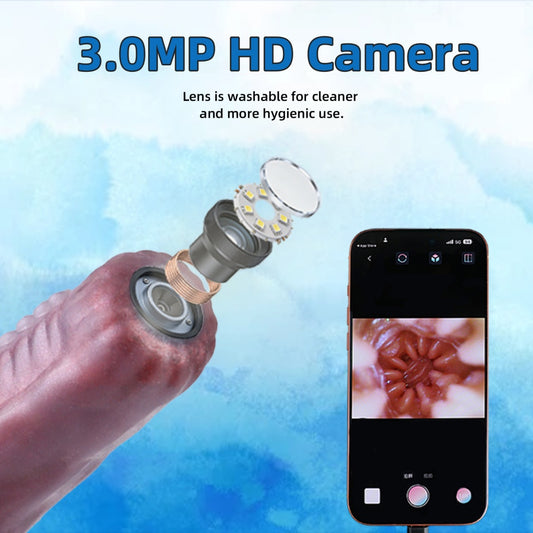
Realistic masturbators are only as anatomically accurate as the molds used to produce them. Most manufacturers use simplified molds that approximate vulvar anatomy without capturing the specific detail that distinguishes innie from outie profiles. The result is a generic "entry" that doesn't correspond to either anatomy type accurately.
Domlust's approach is different:
- Sub-millimeter tooling precision — labia minora detail, clitoral hood position, and labial fold depth are captured at a level of accuracy that distinguishes innie from outie profiles
- Anatomical reference data — molds are developed from real anatomical reference, not stylized approximations
- Dual-layer silicone construction — softer outer layer (Shore A 10–15) mimics labia tissue compliance; firmer inner core (Shore A 25–30) maintains structural integrity during use
- Hand-finishing — each piece is hand-painted with skin tone gradients and surface texture detail that cannot be achieved through molding alone
- Platinum silicone exclusively — the material's non-porous structure allows finer surface detail to be captured and retained over time; TPE degrades and loses surface detail with use
What This Means for the User
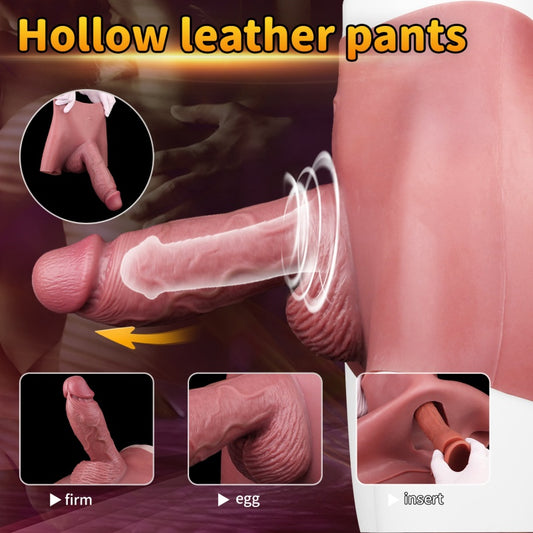
An innie-profile mold creates a tighter, smoother entry sensation — the labia majora surface is the primary contact point. An outie-profile mold creates a more textured entry where the labia minora detail is felt immediately on insertion. These are meaningfully different experiences, and they require meaningfully different mold geometry to produce correctly.
→ Shop Realistic Pocket Pussy — Innie & Outie Profiles →
Why Material Safety Matters for Both Anatomy Types
Regardless of whether you have innie or outie anatomy, any toy in contact with labia minora tissue requires the same material standard: non-porous, phthalate-free, and sterilizable.
Labia minora tissue is among the most sensitive and permeable skin in the body. Porous materials like TPE retain bacteria in microscopic channels that survive standard cleaning — creating a cumulative hygiene risk with every use.
| Property | Platinum Silicone | TPE |
|---|---|---|
| Porosity | ✅ Non-porous | ❌ Porous |
| Bacterial retention | ✅ None | ❌ Yes — cannot be eliminated |
| Phthalate-free | ✅ Yes | ⚠️ Varies by manufacturer |
| Sterilization | ✅ Boil 3 min / autoclave | ❌ Not possible |
| Surface detail retention | ✅ Permanent | ⚠️ Degrades with use |
| Labia contact safety | ✅ Highest | ⚠️ Risk increases with use frequency |
Frequently Asked Questions
What is the difference between innie and outie vagina? +
An innie vagina (vulva) has labia minora that sit tucked inside the labia majora, creating a smoother, more closed external appearance. An outie vagina has labia minora that extend visibly beyond the labia majora. Both are completely normal anatomical variations found equally across the population.
Is an innie or outie vagina more sensitive? +
Outie vaginas tend to have more exposed labia minora tissue with dense nerve endings, making external stimulation feel more immediate and intense. Innie vaginas have more protected nerve endings, which can mean stimulation feels more focused. Individual sensitivity varies significantly regardless of anatomy type.
What causes an innie or outie vagina? +
Vulvar anatomy type is determined by genetics. It is not caused by sexual activity, masturbation, childbirth, or any external behavior. Hormonal changes during puberty influence labia development, but the resulting anatomy is entirely normal across the full spectrum.
Are innie vaginas more common than outie vaginas? +
No. Both are equally common. The perception that innie anatomy is more common comes from selection bias in mainstream media and pornography, not from actual population data. Studies of vulvar morphology show the full spectrum is equally distributed.
What sex toys work best for innie vs outie vaginas? +
For outie anatomy: broad-surface vibrators, vulva pumps with wide flexible rims, and external stimulators that maximize labia contact. For innie anatomy: targeted clitoral stimulators, air-pulse toys, and suction devices with narrower cups. In both cases, platinum silicone is the recommended material for any toy in prolonged labia contact.
Does innie vs outie anatomy affect masturbator design? +
Yes. Innie-style molds feature smoother external labia with a more closed entry, while outie-style molds have more pronounced labia minora detail at the entry point. This affects both visual realism and entry sensation. Domlust produces both profiles in platinum silicone with sub-millimeter mold precision.
Is labiaplasty necessary for an outie vagina? +
No. Labiaplasty is medically indicated only in rare cases where labia minora cause significant physical discomfort. The vast majority of people with outie anatomy experience no functional issues. It is never medically necessary for outie anatomy alone.