
Written by Ethan, Head of Material Engineering at Domlust — 9 years specializing in platinum-cured LSR casting, shore hardness calibration, and mold design for adult wellness products. All material comparisons in this article are based on in-house laboratory testing and direct manufacturing experience.
The fleshlight meaning is straightforward: Fleshlight is a brand of male masturbator designed to simulate penetrative sex, housed in a flashlight-shaped casing. The name has become genericized — many people use "fleshlight" to refer to any pocket pussy or masturbator sleeve, regardless of brand. This article examines what Fleshlight's materials actually are beneath the marketing.
This article functions as a fleshlight review from a material engineering perspective — not a user experience review, but a manufacturer's breakdown of what Fleshlight's materials actually are, how they perform over time, and how they compare to platinum silicone at the molecular level.
Fleshy Pro is another brand name in the male masturbator category — like Fleshlight, it uses TPE-based materials marketed under proprietary branding. The same material limitations apply: porous, non-sterilizable, and subject to plasticizer leaching over time.

Cosara flesh refers to another entry in the branded TPE masturbator category — like Fleshlight's SuperSkin and Fleshy Pro, the "flesh" branding implies skin-like realism while the underlying material remains thermoplastic elastomer. The same degradation timeline, porosity limitations, and plasticizer leaching apply regardless of brand name.
How to use a Fleshlight follows the same basic principle as any sleeve masturbator: apply water-based lubricant to the opening and your shaft, insert slowly, and use a stroking motion. Warming the sleeve in warm water beforehand improves the sensation. However, the material limitations outlined in this article apply regardless of technique — TPE degrades with use and cannot be fully cleaned between sessions.
TL;DR
- Fleshlight's "Super Skin™" is TPE — a plasticizer-saturated thermoplastic that inevitably leaches oil, harbors bacteria, and degrades.
- Platinum-cured liquid silicone (LSR) is chemically inert, non-porous, boil-sterilizable, and dimensionally stable for years.
- The price difference is real. The material difference is bigger.
If you have spent any time exploring the mainstream male masturbator market, you have undoubtedly run into a wall of flashy, trademarked buzzwords. Industry giants like Fleshlight heavily market proprietary material terms such as "Super Skin™" or "Real Feel Gel Material", framing them as revolutionary technological breakthroughs in pleasure engineering.

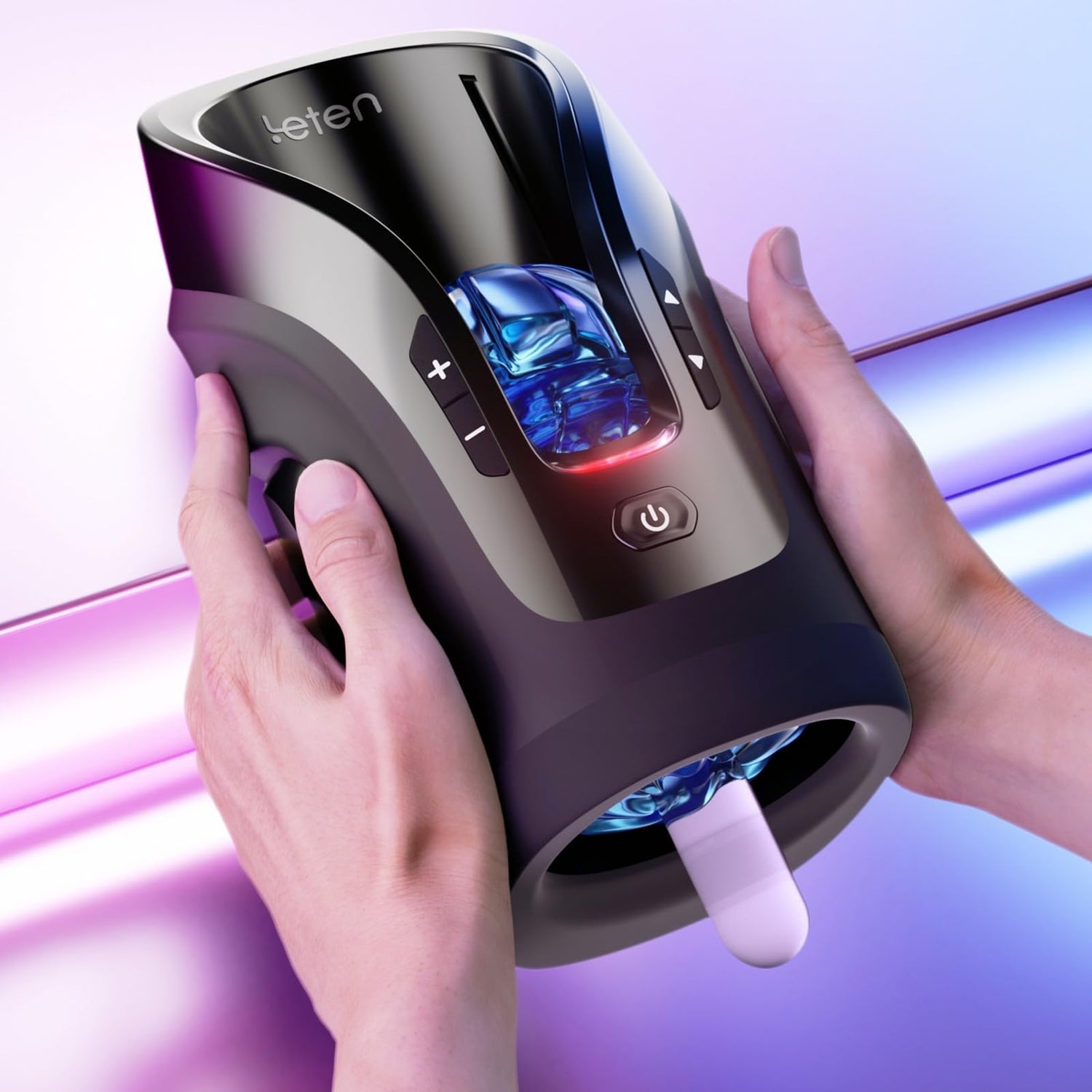
Fleshlight's "Super Skin™" — premium branding, commodity material.
But as an independent workshop specialized in high-end elastomer casting, mold design, and structural polymer mechanics, I've spent nine years on the factory floor watching what these materials actually do over time. It's time to strip away the corporate marketing and look at the raw chemistry.
The truth that mass-market corporations don't want you to know? Super Skin™ is just an upscale, up-charged marketing name for TPE (Thermoplastic Elastomer).
---
🔬 The Micro-Chemistry Paradox: Why TPE Inevitably Degrades
To be completely fair to Fleshlight: TPE is not inherently evil. It is incredibly soft, mimics human skin texture remarkably well when freshly oiled, and is exceptionally cheap to mass-produce via high-volume injection molding. For a $30–$50 product, it makes economic sense.
But from a product longevity and hygiene standpoint, TPE has two fatal, unfixable engineering flaws that no proprietary branding can engineer away:
1. Molecular Leaching (The "Sticky & Oily" Nightmare)
TPE resin in its raw state is relatively rigid. To achieve that soft, lifelike feel, manufacturers must heavily saturate the plastic matrix with mineral oils or chemical plasticizers — typically at 30–60% by weight.
Here is where the science fails the consumer: mineral oil molecules are not covalently bonded to the TPE polymer chains. They merely occupy the microscopic gaps between polymer segments. Over time — due to friction, heat, washing, or simply sitting in a drawer — those oil molecules inevitably migrate to the surface.
This is the exact reason why your mainstream gear eventually turns into a sticky, oil-bleeding magnet that smells faintly of a petroleum refinery and ruins your bedsheets. It is not a defect. It is the material behaving exactly as chemistry predicts.
Our in-house white paper test: We placed a standard TPE sleeve (Shore A ~10) and a Domlust platinum silicone sleeve (Shore A 15) flat on white printer paper for 48 hours at room temperature. The TPE sleeve left a clearly visible oil ring extending 3–4mm beyond the product edge. The platinum silicone sleeve left zero residue.
2. The Porous Trap (Microscopic Biohazard)
Under an electron microscope, TPE is not a solid surface — it is a highly porous, spongy matrix with interconnected micro-channels. Every time a TPE sleeve is used, it absorbs microscopic biological fluids, lubrication residues, and water into those channels.
Because it is porous, you can never truly sterilize it. Soap and water clean the surface. They do not reach the interior. Over time, bacteria and micro-fungi establish permanent colonies inside those invisible pores. No amount of cornstarch or proprietary renewal powder can reverse this molecular reality. It is a ticking clock until the material warps, tears, or becomes a hygiene liability.
This is not a Fleshlight-specific problem. It is a TPE-specific problem. Any brand using TPE — regardless of what they call it — faces the same physics.
---
💎 Enter 100% Platinum-Cured Liquid Silicone: The Gold Standard of Material Science
On the completely opposite end of industrial design sits Platinum-Cured Liquid Silicone (LSR). Unlike TPE, platinum silicone does not rely on cheap oils to achieve elasticity. Instead, it utilizes a precious platinum catalyst to force a permanent, highly stable three-dimensional cross-linking of polymer chains — a process that locks the molecular structure in place at the atomic level.
The result is a material that behaves fundamentally differently in every measurable dimension:
Shore A Hardness: Precision You Can Measure
| Property | TPE (Super Skin™ class) | Domlust Platinum LSR |
|---|---|---|
| Shore A Hardness | ~8–12 (varies batch to batch) | 10–30 (calibrated per SKU) |
| Hardness Consistency | Degrades over time as plasticizer leaches | Stable for 5+ years (no plasticizer) |
| Surface Porosity | High (micro-porous matrix) | Non-porous (sealed polymer surface) |
| Sterilization | Surface clean only | Full boil sterilization (100°C / 5 min) |
| Oil Leaching | Inevitable (physics, not defect) | Zero (no free plasticizer molecules) |
| Biocompatibility Standard | Not rated for implant/body contact | ISO 10993 / FDA 21 CFR 177.2600 compliant grade |
| Texture Retention | Degrades, warps, tears within 6–18 months | Retains 0.1mm mold precision for years |
The Boiling Water Test: A Manufacturer's Benchmark
One of the first tests we run on every new silicone formulation is a 100°C boiling water immersion for 5 minutes. For platinum LSR, the result is always the same: zero dimensional change, zero surface degradation, zero odor release.
We have run the same test on TPE samples. The results: measurable softening within 2 minutes, surface tackiness increase, and in some formulations, visible micro-tearing at stress points. This is not a torture test — 100°C is the temperature of a standard kitchen pot. The fact that a material cannot survive it tells you everything about its long-term stability inside a human body.
Mold Precision: Where the Texture Actually Lives
When I first joined Domlust's engineering team, one of the most striking differences I noticed between TPE and LSR casting was texture fidelity. Our molds are machined to 0.05–0.1mm surface detail resolution. In platinum silicone, every ridge, chamber, and node reproduces at that precision — and stays there.
In TPE, the same mold produces a softer initial impression, but because the material is viscoelastic and plasticizer-dependent, fine texture detail begins to collapse under repeated use. The internal architecture that creates sensation gradually flattens. With platinum silicone, the cross-linked polymer network actively resists deformation and springs back to its original geometry.
---
🏭 Why Mass-Market Brands Won't Switch
This is the question I get asked most often: if platinum silicone is so clearly superior, why doesn't Fleshlight just use it?
The answer is purely economic. Platinum-cured LSR requires:
- Platinum catalyst — a precious metal, priced accordingly
- Precision two-part molds — significantly more expensive than TPE injection tooling
- Controlled cure environments — temperature and humidity affect cross-linking quality
- Longer cycle times — LSR curing cannot be rushed without compromising material integrity
For a company producing hundreds of thousands of units per year at mass-market price points, TPE is the only viable option. The business model depends on it. This is not a criticism — it is a structural reality of scale manufacturing.
Domlust operates at a fundamentally different scale and with a fundamentally different mandate: every product is cast in-house, in small batches, using our own molds. That is the only way to guarantee material integrity at the level we require.
---
📊 Regulatory Context: What the Standards Actually Say
Two regulatory frameworks are relevant here:
ISO 10993 — the international standard for biological evaluation of medical devices — defines biocompatibility requirements for materials in prolonged body contact. Platinum-cured silicone formulations meeting this standard have been validated for implant-grade applications. Standard TPE formulations are not evaluated under this framework.
FDA 21 CFR 177.2600 — the U.S. regulation governing rubber articles intended for repeated food contact — includes platinum-cured silicone as a compliant material. The same cannot be said for plasticizer-heavy TPE formulations.
Neither of these standards was written for adult products specifically. But they represent the closest available scientific benchmarks for what "safe for prolonged body contact" actually means — and platinum silicone consistently meets them while TPE does not.
---
🎯 So Which Should You Choose?
Choose TPE (Super Skin™ class) if you want a mass-market entry point, don't mind strict maintenance protocols, and plan to replace the product within 12–18 months.
Choose Platinum Silicone if you view your collection as a long-term investment in material quality, biological safety, and sensory precision. It costs more upfront. It costs nothing in replacements, renewal powders, or hygiene anxiety.
For collectors who prioritize uncompromising material science and high-definition fantasy sculpting, independent brands like Domlust have set a new industry standard by strictly utilizing 100% medical-grade platinum-cured liquid silicone across their entire lineup — completely bypassing the limitations of traditional TPE.
---
🌌 Beyond the Ordinary: The Domlust Philosophy of Fantasy Engineering
For decades, adult toy consumers accepted a flawed paradigm: that buying a male masturbator meant accepting a disposable product destined to degrade into a sticky biohazard within months.
At Domlust, we completely reject that compromise. We do not hide behind trademarked marketing buzzwords or generic "skin" gimmicks. We engineer exclusively for those who demand the finest in body-safe physics, raw structural longevity, and radical artistic expression.

By combining the absolute pinnacle of 100% premium platinum-cured silicone with hyper-detailed, otherworldly industrial sculpture, we have reimagined what personal pleasure gear can be. Our focus is entirely on:
- Anatomical Fluid Dynamics: Engineering internal dual-channels that utilize material suction and air-flow control without relying on sticky surface friction.
- True Durometer Precision: Masterfully controlling the Shore hardness of our silicone to deliver deep, heavy, and incredibly intense sensations that mimic and exceed organic anatomy.
- Sculptural Mastery: Every piece is a durable work of fantasy art designed to look stunning on your shelf and perform flawless under heavy, long-term usage.
If you are ready to outgrow disposable, porous plastics and invest in a hygienic, high-performance masterpiece that respects your body and your skin, explore our uncompromising lineup of Domlust pocket pussy.

PLATINUM SILICONE · 8KG · DUAL CHANNEL · RIDING TORSO · FANTASY
Ignia – 8KG Platinum Silicone Sex Doll Torso
8KG dead weight for riding stability · Dual channel (vaginal + anal) · 3D dragon-scale exterior grip · 100% platinum-cured silicone throughout · No oiling, no powdering, no degradation
$632.60
View Product →
Educate your mind, understand the material science, and elevate your gear. Your body deserves nothing less.
Related Reading
- The Complete Pocket Pussy Guide — Types, Materials & How to Choose →
- Homemade Fleshlight: Why DIY Materials Fall Even Further Short →
- DIY Pocket Pussy vs Professional Toys: The Material Case →
- Best Pocket Pussy 2026: Top 5 Platinum Silicone Picks →
- Shop Domlust Platinum Silicone Pocket Pussies →
- Sex Doll Doggy Style Guide 2026: Why Material Friction Decides Everything →
- Platinum Silicone vs TPE: The Complete Material Guide
---
❓ Frequently Asked Questions
Is Fleshlight Super Skin safe to use?
Super Skin™ is TPE — a thermoplastic elastomer that is generally considered safe for short-term skin contact. However, it is porous (cannot be fully sterilized), leaches plasticizers over time, and is not rated under ISO 10993 or equivalent biocompatibility standards for prolonged body contact. It is not inherently dangerous, but it carries hygiene limitations that platinum silicone does not.
Can you boil a Fleshlight to clean it?
No. Boiling water (100°C) will cause TPE to soften, deform, and potentially micro-tear. Fleshlight's official cleaning instructions specifically prohibit boiling. Platinum silicone products can be fully boil-sterilized for 5 minutes with zero material degradation.
What is the difference between TPE and platinum silicone?
TPE is a plasticizer-saturated thermoplastic: soft, porous, and prone to oil leaching and bacterial retention. Platinum silicone is a cross-linked polymer network: non-porous, chemically inert, boil-sterilizable, and dimensionally stable. The manufacturing cost difference is significant; the material performance difference is larger.
How long does a platinum silicone pocket pussy last?
With proper care (warm water + mild soap, air dry, store away from direct sunlight), a platinum silicone sleeve will retain its original texture, hardness, and hygiene properties for 5+ years. There are no plasticizers to leach, no pores to harbor bacteria, and no renewal powders required.
Why does my Fleshlight feel sticky?
Stickiness in TPE products is caused by plasticizer migration — the mineral oils that keep the material soft gradually exude to the surface. This is a predictable chemical process, not a manufacturing defect. Renewal powders (cornstarch or proprietary versions) temporarily mask the stickiness by absorbing surface oils, but they do not stop the underlying leaching process. The stickiness will return.