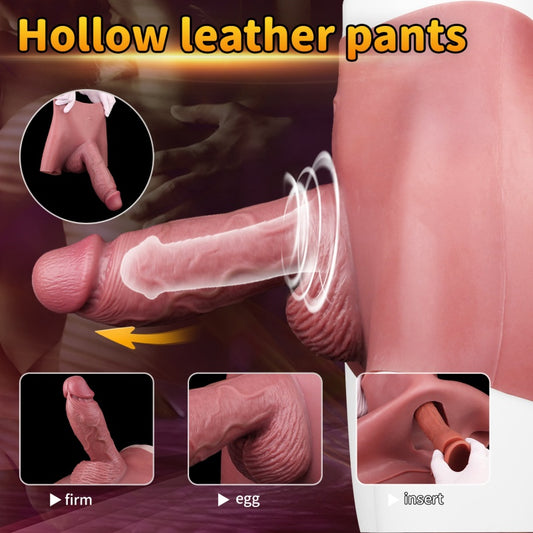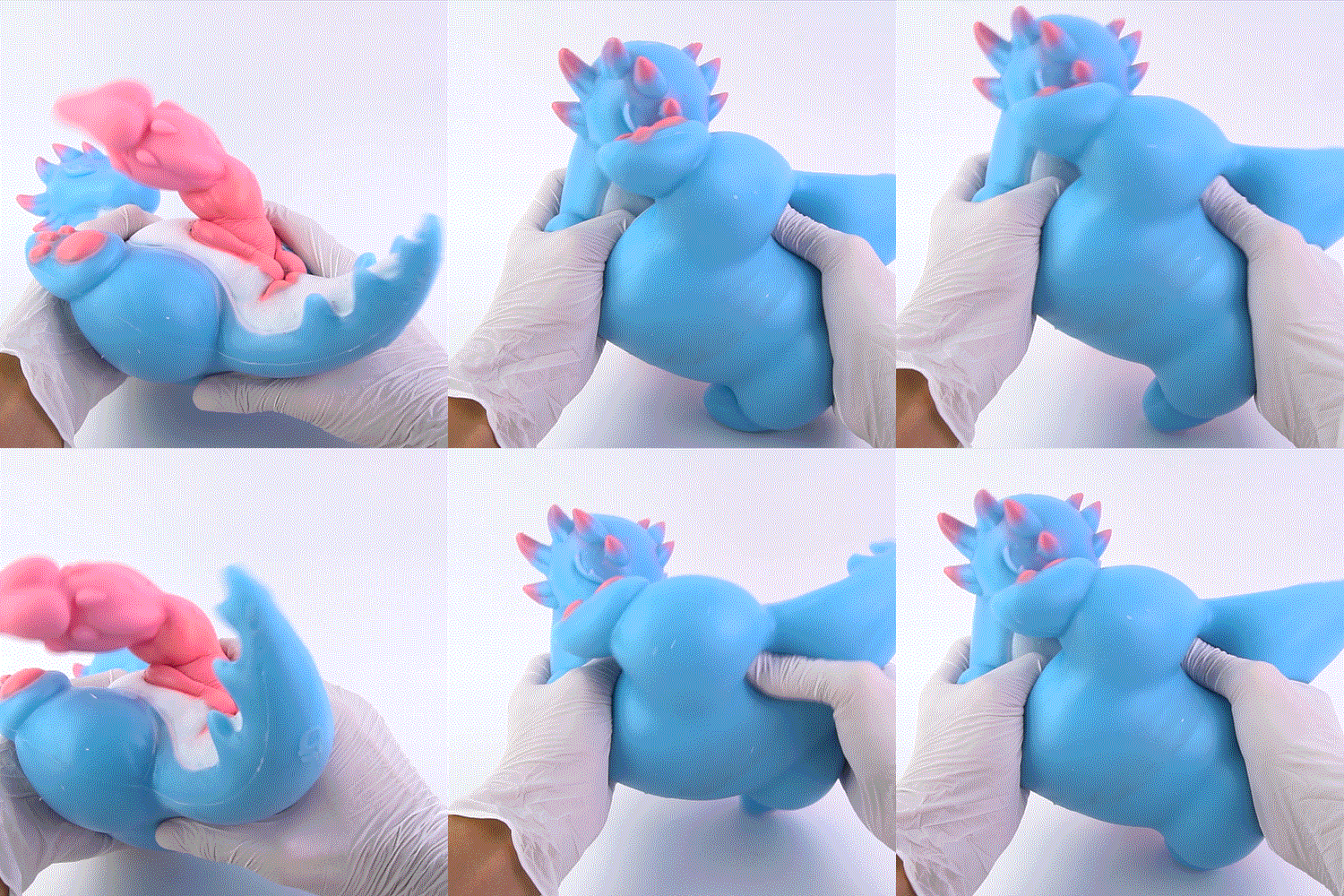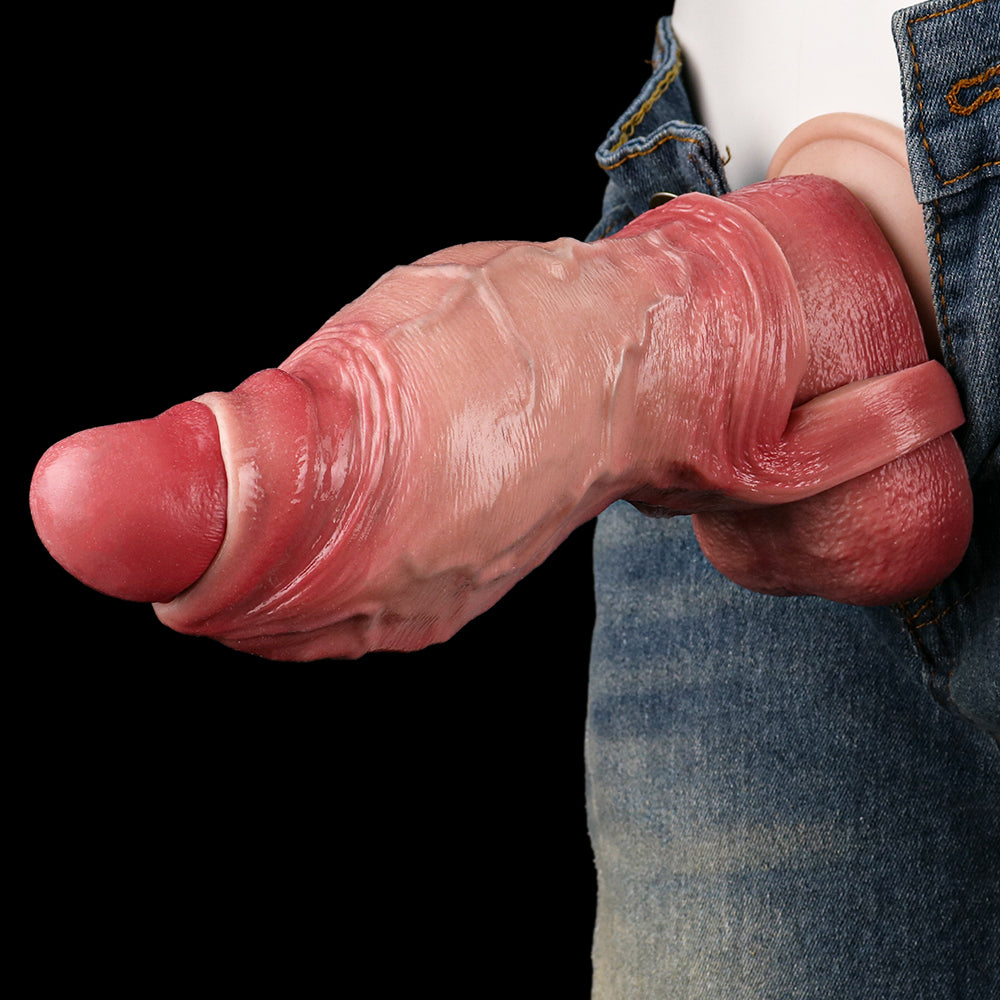
Platinum-cured silicone and TPE are the two materials used in almost every cock sleeve on the market. Silicone is non-porous, boilable, oil-free, and structurally stable for 3–5+ years. TPE is porous, cannot be fully sterilized, leaches plasticizer oil over time, and degrades within 6–18 months. The difference is not about softness — it's about what happens after the first month of use.
Written by Ethan — Head of Material Engineering, Domlust. 9 years in platinum-cured LSR casting and elastomer design.
- TPE leaches oil, harbors bacteria in pores, and degrades within 6–18 months — by design, not defect
- Platinum silicone is non-porous, boilable, oil-free, and structurally stable for 3–5+ years
- For cock sleeves specifically, material determines whether ED support actually works under pressure
Why Material Is the Most Important Decision You'll Make
Most buyers focus on size, texture, or design when choosing a cock sleeve. Material is treated as a footnote. This is exactly backwards.
A cock sleeve undergoes repeated stretching, pressure, heat, and cleaning — often for extended sessions. The material determines whether it holds its shape under pressure, whether bacteria can be fully removed, whether it stays soft or turns sticky, and whether it's still functional in 12 months. Two sleeves can look identical on day one and deliver completely different experiences by month three.
The market is dominated by two materials: TPE (Thermoplastic Elastomer) and platinum-cured silicone. Here's what actually separates them.
What Is TPE — And Why Did It Dominate the Market?
TPE is a soft, flexible plastic that achieves its skin-like feel through heavy saturation with mineral oils or chemical plasticizers — typically 30–60% by weight. It's cheap to produce, easy to mold into complex textures, and feels impressively soft on first touch.
For manufacturers producing at volume and price points under $30, TPE makes economic sense. For buyers expecting long-term performance, it doesn't.

The Two Unfixable Problems With TPE
1. Oil Migration (Why It Turns Sticky)
The plasticizer oils in TPE are not chemically bonded to the polymer chains — they occupy the gaps between them. With use, heat, stretching, and washing, those oil molecules migrate to the surface. This is why TPE sleeves eventually feel greasy or sticky even after cleaning. It's not a defect. It's the material behaving exactly as chemistry predicts. No cleaning routine reverses it.
Our test: We placed a standard TPE sleeve and a Domlust platinum silicone sleeve flat on white paper for 48 hours at room temperature. The TPE sleeve left a visible oil ring extending 3–4mm beyond the product edge. The platinum silicone sleeve left zero residue.
2. Porosity (Why It Can Never Be Fully Cleaned)
TPE is a micro-porous material. Under magnification, it's a spongy matrix of interconnected channels that absorb fluid, bacteria, and lubricant residue with every use. Soap and water clean the surface. They don't reach the interior. Over time, bacteria establishes permanent colonies inside those pores — which is why TPE sleeves develop persistent odor that doesn't wash out. This is also why TPE should never be shared between users.
What Is Platinum-Cured Silicone — And Why Does It Perform Differently?
Platinum-cured liquid silicone (LSR) uses a platinum catalyst to create a permanent three-dimensional cross-linking of polymer chains at the molecular level. The result is a material that achieves elasticity without plasticizer oils — its softness is structural, not chemical.
This single difference changes everything about long-term performance:
- Non-porous surface — bacteria, fluid, and lubricant sit on the surface and wash off completely
- No oil migration — no free plasticizer molecules means no stickiness, no greasiness, no sheet staining
- Boil-sterilizable — 100°C for 3–5 minutes achieves full sterilization; TPE warps and tears at this temperature
- Structural stability under pressure — maintains shape and position without full erection support, which is why it's the only material that genuinely works for ED use
- Consistent hardness — Shore A hardness remains stable for years; TPE softness declines as plasticizer leaches
Side-by-Side Comparison
| Property | TPE | Platinum Silicone |
|---|---|---|
| Initial softness | Very soft (oil-saturated) | Soft & elastic (structural) |
| Porosity | Porous — absorbs bacteria | Non-porous — surface clean only |
| Sterilization | Surface clean only — cannot boil | Fully boilable (100°C / 5 min) |
| Oil leaching | Inevitable over time | Zero — no free plasticizer |
| Elasticity over time | Declines as plasticizer leaches | Stable for 3–5+ years |
| ED support | Collapses without full erection | Holds shape independently |
| Cleaning routine | Lukewarm water + renewal powder required | Warm water + mild soap. Done. |
| Expected lifespan | 6–18 months | 3–5+ years |
| Safe to share | No — cannot be fully sterilized | Yes — after boil sterilization |
Where the Difference Is Most Critical: ED Use & High-Stretch Designs
For standard use, the material difference becomes obvious within a few months. For two specific use cases, it's critical from the first session:

Erectile Dysfunction Support
A cock sleeve for ED needs to hold its shape and position without full erection support. TPE collapses under pressure when the wearer isn't fully erect — the material lacks the structural integrity to maintain position during penetration. Platinum silicone holds its form independently of erection state. This is not a minor performance difference. It's the difference between a sleeve that works for ED and one that doesn't.
Fantasy, Oversized & Knotted Designs
High-stretch designs place extreme demands on material elasticity. TPE under repeated maximum stretch loses rebound strength quickly — the sleeve becomes looser, less supportive, and eventually tears at stress points. Platinum silicone maintains its Shore A hardness and elastic recovery under repeated stretching. Domlust's fantasy and oversized sleeves are calibrated to specific Shore A values per SKU to ensure consistent performance across the full stretch range.
👉 Why Cock Sleeves Fail Mid-Use — The Material Engineering Explanation →
The "Silicone" Labeling Problem
Not all products labeled "silicone" are platinum-cured silicone. The market uses several terms interchangeably that describe very different materials:
- "Silicone" — could mean platinum-cured LSR, peroxide-cured silicone, or silicone-TPE blends. Quality varies significantly.
- "Super Skin™", "Real Feel", "Ultra Soft Silicone" — proprietary marketing names for TPE. Not silicone.
- "Body-safe silicone" — a marketing claim, not a certification. Platinum-cured silicone meets ISO 10993 / FDA 21 CFR 177.2600 standards. Generic "body-safe" claims do not.
All Domlust cock sleeves use platinum-cured liquid silicone with calibrated Shore A hardness per product. No TPE, no blends, no marketing substitutions.
👉 The Full Breakdown: Super Skin™ vs Platinum Silicone — What the Labels Actually Mean →
Frequently Asked Questions
Q: Is TPE unsafe to use?
TPE is not acutely unsafe for short-term use. The problems are long-term: bacterial accumulation in pores that can't be fully cleaned, plasticizer oil migration that changes surface feel, and structural degradation that shortens lifespan. For occasional use, TPE is tolerable. For regular use, the hygiene and durability trade-offs are significant.
Q: Why does my TPE sleeve smell even after cleaning?
Because the odor source is inside the material, not on the surface. TPE's porous structure absorbs biological residue into micro-channels that soap and water can't reach. Once odor has established inside the pores, it cannot be fully removed. This is a material characteristic, not a cleaning failure.
Q: Does platinum silicone feel less soft than TPE?
Fresh TPE can feel softer than silicone at first touch because it's heavily oil-saturated. Platinum silicone's softness comes from its molecular structure — it's consistent, doesn't change with use, and doesn't require oil to maintain it. After a few months of use, most users find platinum silicone feels better because it hasn't degraded.
Q: Are all silicone cock sleeves the same quality?
No. Silicone quality varies significantly by curing method. Platinum-cured silicone (LSR) is the highest grade — chemically inert, dimensionally stable, boilable. Peroxide-cured silicone is lower grade and can leave chemical residues. Silicone-TPE blends behave more like TPE than silicone. The curing method is rarely disclosed on product pages — which is why Domlust specifies platinum-cured LSR explicitly.
Q: Which material is better for fantasy or oversized cock sleeves?
Platinum silicone, without exception. Fantasy and oversized designs require maximum stretch — often 2–3× the resting diameter. TPE loses elastic recovery under repeated maximum stretch within weeks. Platinum silicone maintains its Shore A hardness and rebound strength across the full stretch range for years.
Related Reading
- Complete Cock Sleeve Guide 2026 — types, sizing, ED use, and how to choose
- The Myth of Super Skin™: TPE vs Platinum Silicone Engineering
- Why Cock Sleeves Fail Mid-Use — Material Engineering Explained
- How to Clean a Cock Sleeve — Material-Specific Care Guide
- Shop All Platinum Silicone Cock Sleeves at Domlust →
- Domlust Cock Sleeve Pants Collection →