
Rechercher comment fabriquer un godemichet maison est plus courant que la plupart des gens ne l'admettent. Que ce soit par curiosité, pour des raisons budgétaires, ou simplement par envie immédiate, cette impulsion est compréhensible. Ce guide aborde ce qui fonctionne réellement, ce qui est véritablement dangereux, et comment prendre des décisions éclairées si vous optez pour la méthode DIY.
En bref : certaines méthodes de fabrication de godemichets maison sont raisonnablement sûres. La plupart ne le sont pas. La différence réside dans le matériau, la qualité de surface et la manière dont vous l'utilisez.

La fabrication d'un godemichet maison est-elle sûre ?
Cela dépend entièrement de ce que vous utilisez et de la manière. Les tissus internes du corps — vaginaux et anaux — sont très sensibles à la texture de surface, à la composition chimique et à la contamination bactérienne. Un matériau qui semble lisse et inoffensif à l'extérieur peut provoquer des micro-déchirures, des irritations chimiques ou des infections à l'intérieur.
Quand le DIY est acceptable
- Le matériau est non poreux (ne peut pas abriter de bactéries).
- La surface est complètement lisse, sans bords rugueux, coutures ou textures pouvant causer des abrasions.
- L'objet peut être correctement stérilisé avant utilisation.
- Pour usage anal : l'objet a une base évasée ou un cordon de récupération — sans exception.
Quand le DIY n'est pas acceptable
- Le matériau est poreux (bois, la plupart des plastiques, aliments) — les matériaux poreux ne peuvent pas être stérilisés et abritent des bactéries même après lavage.
- L'objet présente des bords coupants, des coutures ou des irrégularités de surface.
- Le matériau a une composition chimique ou des revêtements inconnus.
- Vous envisagez un usage anal avec un objet qui n'a pas de base évasée — les objets sans mécanisme de récupération peuvent se coincer et nécessiter une intervention médicale.
Matériaux sûrs pour un godemichet maison
Options sans danger pour le corps
Silicone platine de qualité alimentaire — Le seul matériau DIY qui correspond aux normes professionnelles des jouets. Utilisé dans les kits de moulage (comme Clone-A-Pussy), il est non poreux, non toxique et stérilisable. Nécessite l'achat d'un kit de moulage en deux parties ; ce n'est pas une solution "produit ménager", mais c'est la voie DIY la plus sûre.
Verre borosilicaté — Non poreux, stérilisable et sans danger pour le corps lorsqu'il est lisse et intact. Seuls les jouets en verre fabriqués à cet effet sont qualifiés — réutiliser une bouteille ou un bocal en verre n'est pas sûr en raison des coutures, des irrégularités de surface et du risque de casse sous pression.
Acier inoxydable (qualité chirurgicale) ou aluminium — Non poreux et stérilisable. Encore une fois, seuls les objets fabriqués à cet effet avec des surfaces lisses et finies. Un objet métallique aléatoire de votre cuisine n'est pas équivalent.
Matériaux à éviter — et pourquoi
Bois : Poreux quelle que soit la finition. Se brise sous pression. Ne peut pas être stérilisé. À éviter complètement.
Bougies : La cire de paraffine est poreuse et contient des additifs chimiques. Se brise sous pression. Non sans danger pour le corps.
Aliments (concombres, bananes, etc.) : Très poreux, abritent des bactéries, se dégradent pendant l'utilisation. Résidus de pesticides sur la peau. Le choix DIY le plus courant — et l'un des moins sûrs.
Bouteilles ou contenants en plastique : Les coutures, la lixiviation chimique (surtout avec la chaleur ou le frottement) et les irrégularités de surface les rendent réellement dangereux en interne.
Tout ce qui contient de la peinture, de la laque ou un revêtement inconnu : Les revêtements se dégradent avec le frottement et la chaleur corporelle. Le risque d'exposition chimique est significatif.
Méthodes de fabrication de godemichets maison : ce qui fonctionne réellement
Méthode 1 — Moulage DIY en silicone (Option DIY la plus sûre)
L'utilisation d'un kit de moulage en silicone platine de qualité alimentaire est ce qui se rapproche le plus d'un résultat professionnel pour une approche DIY. Le processus implique la création d'un moule (soit en forme libre, soit en utilisant un objet existant comme modèle) et le moulage de silicone sans danger pour le corps.
Ce dont vous avez besoin :
- Silicone platine en deux parties (qualité alimentaire ou sans danger pour le corps)
- Une forme de moule — soit un récipient de moule fabriqué à cet effet, soit un moule DIY construit à partir d'argile ou de mousse
- Outils de mélange et une surface plane
Processus de base :
- Construire ou préparer votre moule dans la forme désirée
- Mélanger le silicone en deux parties au rapport spécifié (généralement 1:1 en volume)
- Verser lentement pour éviter les bulles d'air ; tapoter le moule pour libérer l'air emprisonné
- Laisser durcir complètement (4 à 8 heures à température ambiante)
- Démouler soigneusement ; laver à l'eau tiède et au savon antibactérien avant utilisation
Limitations : Sans moules professionnels, la forme sera basique. La texture interne est lisse. Le résultat est sans danger pour le corps, mais ne reproduira pas la texture conçue d'un jouet fabriqué à cet effet. Pour un moulage personnalisé utilisant une anatomie réelle, un kit de moulage de vagin est une version plus structurée de cette approche.
Méthode 2 — Réaffectation d'objets lisses et sûrs pour le corps
Certains objets existants répondent aux critères de sécurité minimums pour une utilisation externe ou vaginale. La liste de vérification avant d'envisager un objet :
- ✅ Matériau non poreux (verre, acier inoxydable, plastique dur de qualité médicale)
- ✅ Surface complètement lisse — pas de coutures, de crêtes ou de texture
- ✅ Pas d'arêtes vives nulle part sur l'objet
- ✅ Peut supporter l'ébullition ou la stérilisation à l'alcool sans se dégrader
- ✅ Pour un usage anal : possède une base évasée plus large que le point le plus large de la partie insérable
- ❌ Si l'une des conditions ci-dessus n'est pas remplie — ne pas l'utiliser
Objets qui répondent parfois à ces critères : presse-papiers en verre lisses et sans soudure ; certains ustensiles de cuisine en acier inoxydable avec des extrémités arrondies et lisses (confirmer la qualité du matériau). Objets qui ne répondent jamais à ces critères : tout ce qui est en bois, en nourriture, en plastique standard ou avec une irrégularité de surface.
Méthode 3 — Kits de clonage (DIY avec des matériaux professionnels)
Les kits Clone-A-Pussy et Clone-A-Willy comblent le fossé entre le DIY et le professionnel. Ils utilisent un composé de moulage de qualité alimentaire et du silicone sans danger pour le corps pour créer une réplique personnalisée à partir de l'anatomie réelle. Le résultat est un jouet non poreux, stérilisable et personnalisé — le résultat le plus sûr disponible à partir d'un processus DIY.
Instructions complètes et à quoi s'attendre : Clone a Pussy : Instructions complètes du kit, tutoriel et résultats.
Comment utiliser un godemichet maison en toute sécurité
Lubrification
Utilisez toujours du lubrifiant. Pour les moulages DIY en silicone : lubrifiant à base d'eau uniquement (le lubrifiant à base de silicone dégrade le silicone). Pour les objets en verre ou en métal : les lubrifiants à base d'eau ou de silicone fonctionnent tous deux. N'utilisez jamais de produits à base d'huile s'il y a un risque de contact avec du latex ou si vous êtes sujet aux infections bactériennes.
Utilisation anale : Exigences supplémentaires
Tout objet utilisé par voie anale doit avoir une base évasée — une base plus large que le point le plus large de la partie insérable, empêchant l'objet d'être entièrement aspiré à l'intérieur. C'est une condition non négociable. Les objets sans base évasée peuvent se coincer dans le rectum et nécessiter une intervention médicale. Cela s'applique aux objets DIY et aux jouets conçus à cet effet.
Inspection avant utilisation
Avant chaque utilisation : inspectez l'objet pour détecter les fissures, éclats, changements de surface ou toute nouvelle irrégularité. Une fissure dans le verre ou un défaut de surface dans le silicone qui n'était pas là avant signifie que l'objet ne doit pas être utilisé. Jetez et remplacez.
Nettoyage et rangement
- Moulages en silicone : Laver à l'eau tiède et au savon antibactérien. Peut être bouilli pendant 3 à 5 minutes pour une stérilisation complète. Laisser sécher complètement à l'air avant de ranger.
- Objets en verre ou en métal : Laver à l'eau et au savon ; peut être bouilli ou essuyé avec de l'alcool isopropylique. Sécher complètement.
- Rangement : Conteneur propre et sec à l'abri de la poussière et de la lumière directe du soleil. Le silicone attire la poussière — une pochette en tissu ou un sac scellé fonctionne bien.
Godemichet maison vs. conçu à cet effet : comparaison honnête
| Godemichet maison | Jouet conçu à cet effet | |
|---|---|---|
| Sécurité des matériaux | ⚠️ Dépend de la méthode | ✅ Certifié sans danger pour le corps |
| Texture interne | ❌ Lisse uniquement (silicone DIY) ou aucune | ✅ Motifs de texture conçus |
| Durabilité | ⚠️ Variable | ✅ Conçu pour une utilisation répétée |
| Sécurité anale | ⚠️ Uniquement si la base est évasée | ✅ Conçu avec des dispositifs de sécurité |
| Stérilisabilité | ⚠️ Uniquement les matériaux non poreux | ✅ Silicone platine non poreux |
| Coût | ✅ Faible à nul | ⚠️ Coût initial plus élevé |
| Personnalisation | ✅ Kits de clonage uniquement | ❌ Designs standard |
La conclusion honnête : un moulage en silicone DIY ou un kit de clonage est une option légitime pour une curiosité ponctuelle ou une personnalisation. Pour une utilisation régulière, la qualité du matériau, la conception de la texture et la sécurité d'un jouet conçu à cet effet sont significativement meilleures — et la différence de coût à long terme est plus faible qu'il n'y paraît.
Améliorez votre expérience : Godemichets fantaisie conçus à cet effet
Si vous avez exploré le DIY et que vous désirez la texture, la qualité des matériaux et le design que les méthodes maison ne peuvent pas reproduire, voici les points de départ à considérer.
Les collections de godemichets et de godemichets fantaisie de Domlust sont fabriquées en silicone durci au platine — non poreux, stérilisable et conçu avec un niveau de détail de surface que le moulage DIY ne peut atteindre. Les options d'entrée de gamme sont proposées à des prix accessibles pour les utilisateurs qui passent du DIY au produit conçu à cet effet.
Améliorez votre expérience : Alternatives conçues à cet effet
Si vous avez exploré le DIY et que vous désirez la qualité des matériaux, l'ingénierie des textures et la conception de sécurité que les méthodes maison ne peuvent reproduire, celles-ci méritent d'être considérées. Toutes fabriquées en silicone durci au platine : non poreuses, stérilisables et conçues pour une utilisation répétée.

RÉALISTE · DOUBLE DENSITÉ · PORTABLE
Godemichet à sangle réaliste — Silicone double densité portable
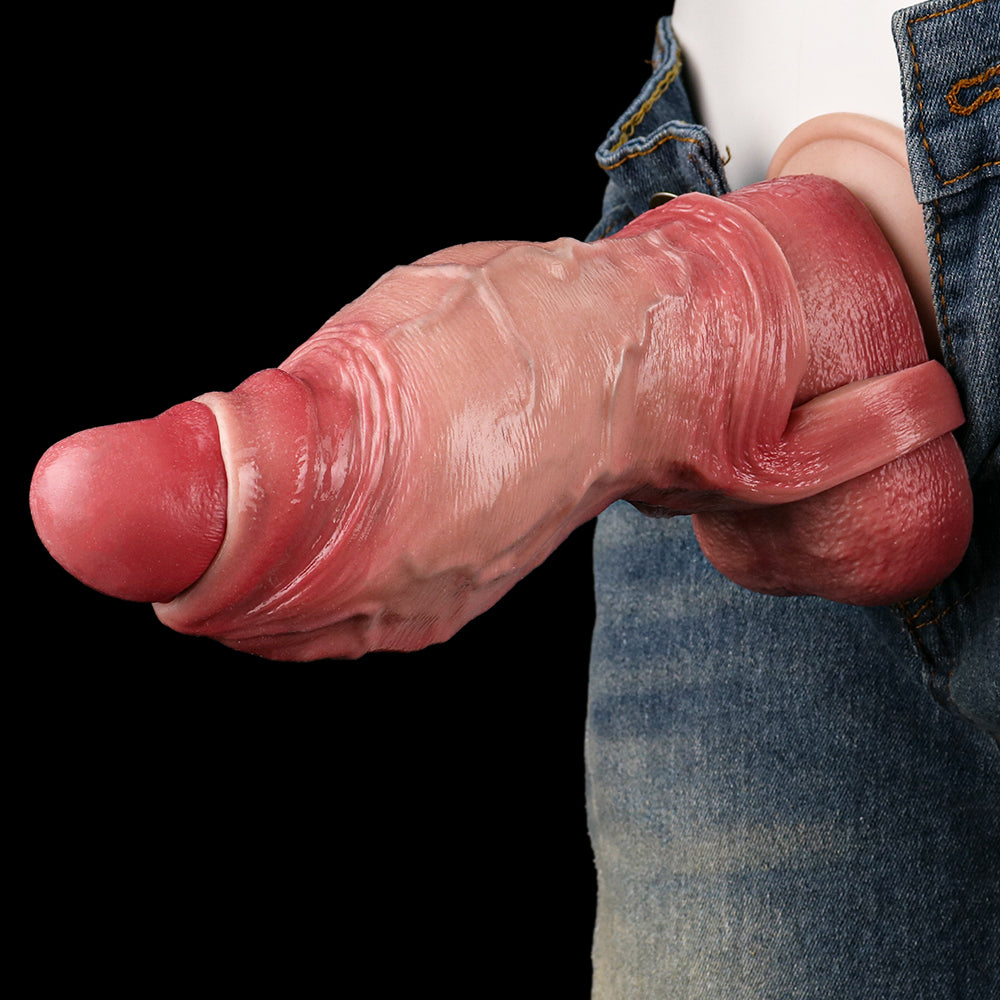
Noyau interne ferme, couche externe douce et chaude au toucher avec des veines réalistes et un gland détaillé. Système de harnais à trois points qui élimine le glissement. Silicone durci au platine — le standard de matériau que le moulage DIY vise mais atteint rarement.
Voir le produit →
FANTAISIE · NOEUDS · VENTOUSE
Godemichet à nœud de chien — Pénis de créature en silicone platine double couche
Tige effilée avec base de nœud bulbeuse pour une sensation d'expansion. Construction double couche : noyau interne ferme, couche externe douce et semblable à la peau. Base à ventouse industrielle. L'anatomie de créature et la précision des matériaux qu'aucune méthode DIY ne peut reproduire.
Voir le produit →
RÉALISTE · ÉJACULANT · DOUBLE DENSITÉ
Godemichet géant noir réaliste éjaculant — Silicone platine double densité
Canal interne en silicone avec seringue de 100 ml et poire à presser pour une éjaculation contrôlée par l'utilisateur. Veines prononcées, gland pulpeux, détails réalistes de plis cutanés. Base à ventouse industrielle. La fonction éjaculatoire que les kits de moulage DIY ne peuvent pas intégrer.
Voir le produit →
FANTAISIE · DOUBLE PÉNÉTRATION · ÉCAILLE DE DRAGON
Godemichet fantaisie Dragon Rider — Godemichet monstre à double pénétration
Design hybride dragon-humain à double tige optimisé pour le chevauchement. Tige principale striée avec des nœuds d'écailles de dragon empilés ; tige secondaire incurvée pour une stimulation anale simultanée. Texture d'armure à écailles sur tout le corps dans un mélange de silicone tricolore. Silicone 100 % durci au platine.
Voir le produit →FAQ : Godemichet fait maison
Q : Quels articles ménagers peuvent être utilisés comme godemichet fait maison ?
Très peu d'articles ménagers répondent véritablement aux critères de sécurité pour un usage interne. L'objet doit être non poreux, complètement lisse sans coutures ni bords, stérilisable et, pour un usage anal, avoir une base évasée. Les objets en verre borosilicaté lisses et sans soudure et certains articles en acier inoxydable de qualité chirurgicale peuvent parfois convenir. La plupart des articles ménagers courants (aliments, plastique, bois, bougies) ne répondent pas à ces critères et comportent un risque réel de blessure ou d'infection.
Q : Est-il sûr de fabriquer un godemichet fait maison ?
Cela dépend de la méthode. Le moulage de silicone DIY en utilisant du silicone platine de qualité alimentaire est raisonnablement sûr lorsqu'il est effectué correctement. La réutilisation d'objets ménagers n'est sûre que si l'objet est non poreux, lisse et stérilisable. La plupart des matériaux improvisés – aliments, bois, plastique standard – ne sont pas sûrs pour un usage interne en raison de leur porosité, de leurs irrégularités de surface ou de leur composition chimique.
Q : Quel est le meilleur matériau pour un godemichet fait maison ?
Le silicone platine de qualité alimentaire est le meilleur matériau pour un godemichet DIY — il est non poreux, non toxique, sans danger pour le corps et stérilisable. Il nécessite un kit de moulage (silicone en deux parties et un moule), mais le résultat est ce qui se rapproche le plus des normes de jouets professionnels pour un godemichet fait maison. Le silicone des kits de clonage (des kits Clone-A-Pussy ou Clone-A-Willy) utilise la même catégorie de matériau.
Q : Comment nettoyer un godemichet fait maison ?
Pour les moulages en silicone : laver à l'eau tiède et au savon antibactérien ; faire bouillir pendant 3 à 5 minutes pour une stérilisation complète. Pour les objets en verre ou en métal : laver à l'eau et au savon, puis essuyer avec de l'alcool isopropylique ou faire bouillir. Toujours laisser sécher complètement à l'air avant de ranger. N'utilisez jamais un matériau poreux — il ne peut pas être correctement nettoyé, quelle que soit la méthode.
Q : Peut-on utiliser un godemichet fait maison par voie anale ?
Uniquement s'il possède une base évasée — une base plus large que le point le plus large de la partie insérable, ce qui empêche l'objet d'être entièrement aspiré à l'intérieur. C'est une exigence de sécurité stricte, non une préférence. Les objets sans base évasée peuvent se coincer dans le rectum et nécessiter une intervention médicale. La plupart des objets improvisés n'ont pas de base évasée et ne doivent pas être utilisés par voie anale.
Q : Les godemichets faits maison sont-ils meilleurs que ceux achetés en magasin ?
Pour la personnalisation (kits de clonage), le DIY présente un réel avantage. Pour la texture, la qualité des matériaux, la durabilité et la conception de sécurité, les jouets conçus à cet effet sont significativement meilleurs. Un moulage en silicone DIY produit un canal lisse ; les jouets conçus à cet effet ont une texture interne élaborée que les méthodes DIY ne peuvent reproduire sans moules professionnels.