
Une analyse approfondie des matériaux, de la fabrication et des raisons pour lesquelles le terme « réaliste » n'est pas aussi simple qu'il y paraît.
La vérité qui dérange : la plupart des jouets « réalistes » ne sont pas conçus pour durer
Si vous avez déjà passé du temps à explorer les jouets masculins, vous avez probablement remarqué quelque chose d'étrange.
Tout est étiqueté « ultra-réaliste ».
Tout revendique « une douceur semblable à la peau ».
Pourtant, d'une manière ou d'une autre… l'expérience varie énormément.
Ce n'est pas une exagération marketing, c'est un problème de matériaux.
En coulisses, l'industrie des jouets pour adultes est encore majoritairement dominée par le TPE (élastomère thermoplastique). Et il y a une raison à cela :
Il est bon marché, flexible et facile à produire en masse.
Mais cette commodité s'accompagne de compromis dont la plupart des marques ne parlent pas ouvertement.
TPE vs Silicone Platine : Différences Clés
| Caractéristique | TPE | Silicone Platine |
|---|---|---|
| Type de Matériau | Élastomère thermoplastique | Élastomère thermodurcissable |
| Porosité | Poreux | Non poreux |
| Durabilité | Moyenne | Élevée |
| Entretien | Nécessite un nettoyage soigneux | Facile à nettoyer |
| Stabilité de la texture | Se dégrade avec le temps | Consistance durable |
| Coût | Faible | Élevé |
| Complexité de fabrication | Faible | Très élevée |
TPE : Le compromis préféré de l'industrie
Le TPE n'est pas intrinsèquement mauvais, en fait, il est incroyablement utile. Mais il est souvent poussé bien au-delà de ce pour quoi il est idéal.
Pourquoi les fabricants adorent le TPE
- Coût des matières premières faible
- Cycles de production rapides
- Moulage et démoulage faciles
- Élasticité élevée (idéal pour une « prise » exagérée)
Du point de vue de l'usine, le TPE est efficace. Il permet aux marques de :
- Lancer rapidement
- Produire à grande échelle
- Maintenir des prix compétitifs
Où le TPE est insuffisant
Voici la partie qui apparaît rarement dans les descriptions de produits :
- Porosité : Le TPE est naturellement poreux, ce qui signifie qu'il peut emprisonner des bactéries au fil du temps
- Saignement d'huile : Les formulations de qualité inférieure peuvent libérer des huiles, entraînant une adhérence de surface
- Fatigue structurelle : Une utilisation répétée peut dégrader les textures internes
- Lots incohérents : De petits changements de formulation peuvent affecter considérablement la sensation
En bref, le TPE est optimisé pour le coût et la flexibilité, pas pour la stabilité des matériaux à long terme.
Silicone Platine : Une philosophie complètement différente
Parlons maintenant de ce que la plupart des marques haut de gamme aspirent à utiliser : le silicone durci au platine.
Ce n'est pas seulement une amélioration, c'est une mentalité de fabrication entièrement différente.
Ce qui rend le silicone platine différent
- Non poreux et sans danger pour le corps
- Chimiquement stable (pas de fuite d'huile)
- Haute résistance à la déchirure
- Maintient sa structure dans le temps
Mais la vraie différence n'est pas seulement dans le matériau, elle est dans le processus.
Pourquoi le silicone platine est si difficile à industrialiser
C'est là que les choses deviennent intéressantes, et où de nombreuses marques abandonnent discrètement.
1. Le coût des matières premières n'est que le début
Le silicone platine peut coûter 3 à 6 fois plus cher que le TPE à la base.
Mais ce n'est pas le véritable goulot d'étranglement.
2. Le processus de durcissement exige de la précision
Contrairement au TPE (qui est fondu et injecté), le silicone platine subit une réaction de durcissement chimique.
Cela signifie que :
- La température doit être étroitement contrôlée
- Les rapports de mélange doivent être exacts
- La contamination peut ruiner des lots entiers
C'est plus proche de la fabrication d'électronique que de la production de jouets traditionnelle.
3. L'ingénierie des moules devient exponentiellement plus difficile
Le silicone se comporte différemment à l'intérieur des moules :
- Il ne coule pas aussi facilement que le TPE
- Les bulles d'air sont plus difficiles à éliminer
- Les textures internes fines nécessitent des systèmes d'évacuation d'air avancés
Si la conception de votre moule n'est pas parfaite, vous ne perdez pas seulement les détails, vous perdez le produit entier.
4. Les taux de rendement sont plus faibles
Avec le TPE, des défauts mineurs peuvent souvent être tolérés ou retraités.
Avec le silicone platine :
- Un durcissement imparfait = rebut total
- Un défaut de surface = produit inutilisable
Cela signifie :
Des taux de rejet plus élevés, des coûts plus élevés et des normes de contrôle qualité plus strictes.
Le véritable goulot d'étranglement : la discipline de la chaîne d'approvisionnement
C'est la partie que la plupart des consommateurs ne voient jamais.
L'industrialisation du silicone platine ne consiste pas seulement à avoir de meilleurs matériaux, elle exige :
- Des relations stables avec les fournisseurs
- Des formulations de lots cohérentes
- Des environnements de production propres
- Des techniciens qualifiés (pas seulement des ouvriers d'assemblage)
À bien des égards, cela ressemble davantage aux industries de fabrication de précision qu'aux biens de consommation typiques.
Comment nous avons abordé cela chez Domlust
Lorsque nous avons commencé à développer les produits en silicone Domlust, nous avons pris une décision délibérée :
Nous ne traiterions pas le choix des matériaux comme une case à cocher marketing, mais comme le fondement de toute l'expérience.
Cela signifiait embrasser des contraintes que la plupart des marques évitent.
Nos normes internes
- Contrôle strict de la cohérence de la formulation du silicone
- Validation du durcissement en plusieurs étapes
- Tests de durabilité de la texture (pas seulement la douceur initiale)
- Rejet des lots de qualité inférieure, même à prix coûtant
Pourquoi cela est important pour l'utilisateur
Parce que le « réalisme » ne se limite pas à la sensation d'un objet hors de la boîte.
Il s'agit de :
- Comment il maintient sa structure au fil du temps
- Comment il réagit sous pression
- Comment l'expérience est cohérente d'une session à l'autre
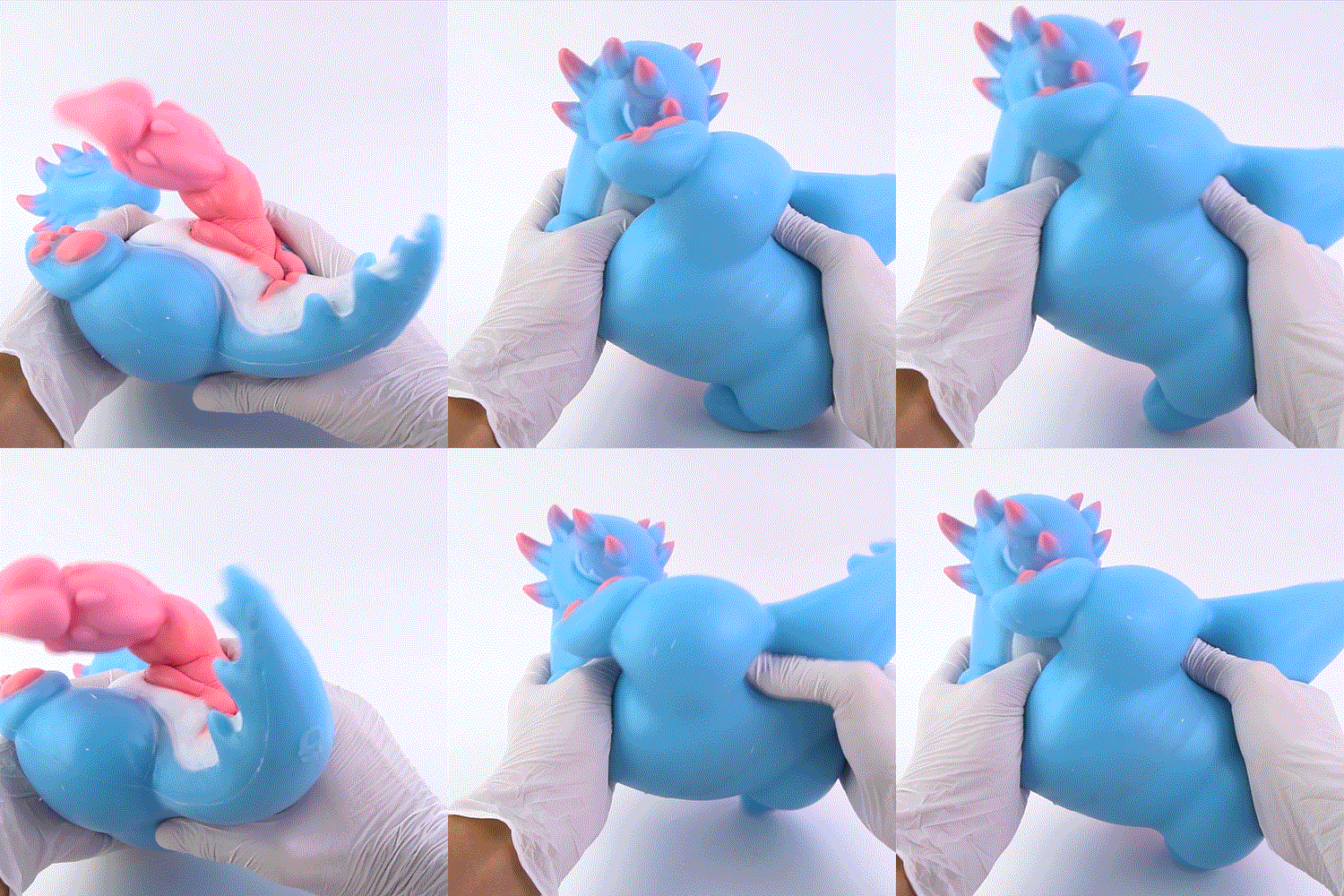
Pour les utilisateurs explorant des conceptions plus spécialisées, y compris des textures de vagin de poche Domlust inspirées du fantastique ou des structures anatomiquement complexes, le choix des matériaux devient encore plus critique.
Les détails internes complexes, comme ceux que l'on trouve dans les conceptions avancées ou inspirées de créatures, ne peuvent maintenir leur intégrité que s'ils sont supportés par des matériaux stables et de haute qualité.
👉 Découvrez plus de jouets sexuels premium Domlust →
Alors pourquoi le TPE domine-t-il encore ?
Réponse simple :
C'est plus facile, plus rapide et plus rentable à grande échelle.
Pour de nombreuses marques, ce compromis a du sens.
Mais pour les utilisateurs à la recherche de quelque chose de plus proche du vrai réalisme + durabilité, le choix des matériaux devient impossible à ignorer.
Réflexions finales : le réalisme est conçu, pas annoncé
La prochaine fois que vous verrez un produit étiqueté « ultra-réaliste », il convient de se demander :
- Quel matériau est réellement utilisé ?
- Comment est-il fabriqué ?
- Quels compromis ont été faits pour atteindre ce prix ?
Parce que dans cette industrie, la plus grande différence n'est pas ce que vous voyez en surface.
C'est tout ce qui se passe derrière.
À propos de l'auteur

Le Dr Adrian Cole est un spécialiste des matériaux en silicone avec plus de 10 ans d'expérience dans l'ingénierie des polymères sûrs pour le corps et la conception de produits intimes.
Il a travaillé en étroite collaboration avec des fabricants et des développeurs de produits pour tester, analyser et améliorer la sécurité, la douceur et la durabilité des produits à base de silicone.
Son expertise se concentre sur : les matériaux en silicone de qualité médicale vs TPE - la simulation de texture réaliste - la sécurité et l'entretien à long terme.
Chez Domlust, Adrian fournit des analyses approfondies de produits, des comparaisons de matériaux et des guides axés sur l'utilisateur pour aider les gens à faire des choix plus sûrs et plus éclairés.