Most people buying their first realistic pussy panty, wearable prosthetic, or intimate silicone garment make the same mistake: they focus on the shape and ignore the material.
The shape determines how it looks. The material determines everything else — how it feels at hour eight, whether it smells by afternoon, whether it is actually safe against your skin all day, and whether it will still look and feel the same in six months.
This guide covers the material science behind daily wear intimate products — what platinum silicone actually is, why TPE and PVC fail for extended wear, and what "medical grade" actually means when a brand claims it.
Why Material Is the Most Important Decision You Will Make
An intimate wearable sits against your skin for hours at a time. It contacts your most sensitive tissue. It retains heat. It encounters sweat. In many use cases, it encounters bodily fluids.
Under these conditions, the difference between materials is not aesthetic — it is physiological. A porous material worn against intimate skin for eight hours is a hygiene problem that no amount of cleaning fully resolves. A non-porous material under the same conditions rinses clean in seconds.
The material decision is not about preference. It is about what is actually happening at the skin contact surface over the duration of wear.
TPE — What It Is and Why It Fails for Daily Wear
TPE (Thermoplastic Elastomer) is the most common material in budget intimate wearables and sex toys. It is soft, flexible, inexpensive to manufacture, and feels realistic immediately out of the packaging.
The problem is what happens over time — and during extended wear.
TPE Is Porous
TPE has a microscopic porous structure — tiny channels and cavities throughout the material that absorb fluids, bacteria, and odour. These cannot be removed by surface cleaning. Warm water and soap clean the surface. They do not reach what has been absorbed into the material.
For a toy used occasionally and stored between uses, this is a manageable limitation. For a garment worn against intimate skin for eight hours a day, it is a fundamental hygiene failure.
TPE Degrades
TPE contains plasticisers — chemical additives that give it flexibility. Over time, these plasticisers migrate to the surface. The result is the characteristic tackiness that TPE develops after weeks of use — the surface becomes sticky, attracts lint and debris, and develops an odour that does not wash out.
This degradation timeline varies by product quality, but most TPE intimate wearables show visible deterioration within three to six months of regular use. Daily wear accelerates this significantly.
TPE Cannot Be Sterilised
Because TPE is porous, it cannot be fully sterilised. Boiling damages the material. Alcohol degrades the surface. UV sterilisation reaches only the surface, not the absorbed interior. For shared use or post-intimate cleaning, TPE cannot be returned to a genuinely hygienic state.
The verdict on TPE for daily wear: Not appropriate. The porosity, degradation timeline, and inability to sterilise make it unsuitable for a garment worn against intimate skin for extended periods.
PVC — The Material You Should Never Wear Against Skin
PVC (Polyvinyl Chloride) is the lowest-quality material found in budget intimate products. It is rigid without plasticisers — so PVC intimate products contain significant quantities of phthalates, chemical plasticisers that have been linked to endocrine disruption in multiple peer-reviewed studies.
PVC intimate products:
- Contain phthalates — chemical plasticisers with documented health concerns
- Have a strong chemical odour that does not dissipate
- Deteriorate rapidly — cracking, becoming sticky, and breaking down within months of regular use
- Cannot be cleaned effectively due to porosity
- Are banned from children's products in the EU and many other jurisdictions due to phthalate content
The verdict on PVC: Do not wear PVC against intimate skin. The phthalate content alone is sufficient reason to avoid it entirely.
Platinum Silicone — The Engineering Behind the Standard
Platinum-cured silicone is manufactured through a process that uses platinum as a catalyst to cross-link silicone polymer chains. The result is a material with a fundamentally different structure from TPE or PVC — and fundamentally different properties for intimate wear.
Non-Porous
Platinum silicone has no porous structure. The cross-linked polymer chains create a continuous, impermeable surface at the molecular level. Bacteria, fluids, and odour cannot penetrate the material — they sit on the surface, where they are removed completely by warm water and soap.
After eight hours of wear, a platinum silicone garment is genuinely clean after a two-minute rinse. This is not a marketing claim — it is a direct consequence of the non-porous material structure.
Non-Oily — No Plasticiser Migration
Platinum silicone does not contain plasticisers. Its flexibility comes from the silicone polymer structure itself, not from chemical additives. There is nothing to migrate to the surface. The material feels identical at hour eight as it did at hour one — no tackiness, no odour development, no surface change.
This is the property that makes daily wear genuinely comfortable. The garment does not become unpleasant to wear as the day progresses.
Waterproof
Platinum silicone is completely waterproof. Water does not penetrate the surface. The material is unaffected by chlorine, salt water, or sweat. Hand-painted pigments applied to platinum silicone bond to the surface rather than sitting on top of it — they do not bleed, fade, or run in water.
This means a platinum silicone wearable can be worn swimming, in the shower, or through a sweaty workout without any effect on the material, the appearance, or the hygiene status.
Temperature Stable
Platinum silicone maintains its properties across a wide temperature range. Body heat — typically 36–37°C at the skin surface — does not soften, distort, or alter platinum silicone. The sculpted shape holds throughout the day regardless of body temperature or ambient heat.
This is particularly relevant for wearables with anatomical detail — the labia sculpting, the inner cavity shape, and the hand-painted pigmentation all remain stable under normal body temperature conditions.
Sterilisable
Because platinum silicone is non-porous, it can be genuinely sterilised — not just surface-cleaned. Boiling (up to 100°C) does not damage the material. Alcohol sterilisation is effective and does not degrade the surface. For products with hand-painted pigmentation, warm water and mild soap is the recommended routine cleaning method — boiling is reserved for deep sterilisation between partners.
Hypoallergenic
Platinum silicone contains no latex, no phthalates, no BPA, and no chemical plasticisers. It does not off-gas chemicals at body temperature. Skin reactions to platinum silicone are extremely rare — it is the same material standard used in medical implants, surgical equipment, and neonatal products.
What "Medical Grade" Actually Means — And What It Doesn't
"Medical grade silicone" is one of the most misused phrases in the intimate product industry. Here is what it actually means — and how to verify it.
What It Should Mean
Genuine medical-grade silicone meets ISO 10993 biocompatibility standards — the international standard for materials that contact human tissue. It is non-cytotoxic, non-sensitising, and non-irritating. It is the standard used in surgical implants, catheters, and medical devices.
What Brands Often Mean When They Say It
Many brands use "medical grade" to mean "silicone that is not PVC" — a much lower bar. Some use it to describe silicone blended with TPE, which retains the porosity problems of TPE while claiming the credibility of silicone.
How to Verify
- Ask for the silicone type: Platinum-cured silicone is the correct answer. Peroxide-cured silicone is a lower-grade alternative that does not meet the same biocompatibility standard.
- The flame test: Genuine platinum silicone, when briefly exposed to a flame, turns white ash and does not melt or drip. TPE melts. PVC melts and produces toxic fumes.
- The smell test: Platinum silicone has no chemical odour. Any chemical smell indicates plasticisers — which means TPE or PVC content.
- The surface test: After a week of use, platinum silicone feels identical to new. TPE becomes tacky. PVC cracks or becomes sticky.
The Domlust Material Standard
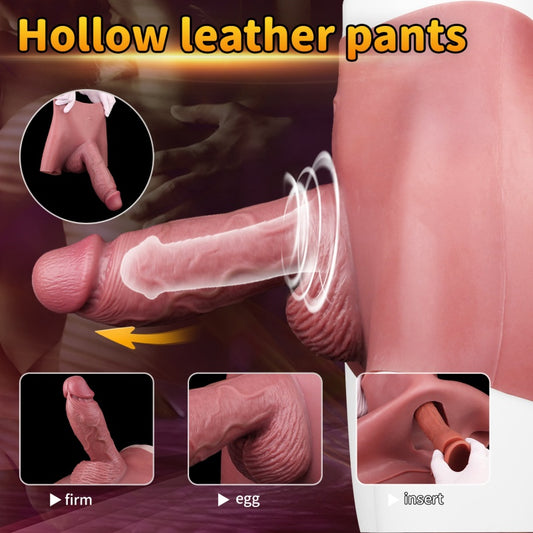
Every Domlust realistic pussy panty is manufactured from 100% platinum-cured silicone throughout — not a silicone-TPE blend, not a silicone exterior over a TPE core. The entire garment, from the outer surface to the internal canal walls, is the same platinum silicone formulation.
The hand-airbrushed pigmentation is applied to the platinum silicone surface using pigments that bond to the material rather than coating it — they do not peel, fade, or transfer to skin during wear.
On the most advanced models, individual pubic hairs are hand-planted directly into the platinum silicone by a specialist sculpting team — rooted into the material rather than attached to the surface, so they move independently and do not detach under normal wear or washing.
The result is a garment that performs identically on day one and day three hundred — because the material does not degrade, does not absorb what it contacts, and does not require anything beyond warm water and soap to maintain.

100% PLATINUM SILICONE · HAND-PLANTED HAIR · NON-POROUS · DAILY WEAR
Rooted Hair Pussy Panties — Platinum Silicone Throughout
100% platinum-cured silicone — outer surface, inner cavity, canal walls. Non-porous: rinses clean after 8 hours of wear in two minutes. Hand-planted individual pubic hair rooted into the silicone, not attached to the surface. Performs identically on day one and day three hundred.
$105.60
View Product →
PLATINUM SILICONE · WATERPROOF · LIGHTWEIGHT · BRIEF CUT
Femboy Brief-Cut Pussy Pants — Waterproof Platinum Silicone
Fully waterproof — pool, ocean, shower. Non-porous surface releases residue completely under warm running water. No plasticisers, no chemical odour, no degradation over time. The lightweight daily wear option in platinum silicone.
$93.60
View Product →Daily Care for Platinum Silicone — The Two-Minute Routine
The non-porous surface makes cleaning genuinely simple. No special equipment. No extended soaking. No anxiety about residue.
- Rinse immediately after removal — warm running water, 30–60 seconds. The non-porous surface releases surface residue completely.
- Apply mild antibacterial soap — work into all surfaces including the internal canal if present. A cleaning syringe helps flush the canal thoroughly.
- Rinse until no soap residue remains.
- Pat dry and air dry completely before storage. The non-porous surface dries quickly — no prolonged drying time required.
What to avoid:
- Silicone-based lubricants — they chemically interact with platinum silicone and degrade the surface over time
- Boiling hand-painted pieces — warm water cleaning is sufficient for routine hygiene; boiling can affect pigmentation
- Alcohol on hand-painted surfaces — use only for deep sterilisation of unpainted internal surfaces
- Direct sunlight storage — shade storage preserves pigmentation over the long term
Frequently Asked Questions
Is platinum silicone actually safe for all-day intimate wear?
Yes. Platinum-cured silicone is the same material standard used in medical implants, surgical equipment, and neonatal products. It is non-porous, hypoallergenic, free from phthalates and BPA, and does not off-gas chemicals at body temperature. Skin reactions to platinum silicone are extremely rare. It is the only material appropriate for extended daily intimate wear.
What is the difference between platinum silicone and regular silicone?
The curing process. Platinum-cured silicone uses platinum as a catalyst to cross-link the polymer chains — producing a non-porous, stable, biocompatible material. Peroxide-cured silicone uses a different catalyst and does not achieve the same biocompatibility standard. Many products labelled "silicone" are peroxide-cured or silicone-TPE blends — neither meets the platinum silicone standard for intimate daily wear.
Why does TPE become tacky and smell after a few weeks?
TPE contains plasticisers — chemical additives that provide flexibility. Over time, these plasticisers migrate to the surface of the material. The result is the characteristic tackiness and odour development that TPE products exhibit after weeks of regular use. Platinum silicone contains no plasticisers — its flexibility comes from the polymer structure itself — so this degradation does not occur.
Can you sterilise platinum silicone pussy panties between uses?
Yes. Because platinum silicone is non-porous, it can be genuinely sterilised. For routine daily cleaning, warm water and mild antibacterial soap is sufficient — the non-porous surface releases all surface residue completely. For deep sterilisation (between partners or after intimate use), a diluted neutral detergent wash followed by a thorough rinse is recommended. Avoid boiling hand-painted pieces — this is reserved for unpainted silicone surfaces.
How do I know if a product is actually platinum silicone?
Three tests: First, smell — platinum silicone has no chemical odour. Any chemical smell indicates plasticisers (TPE or PVC content). Second, the surface after use — platinum silicone feels identical to new after weeks of use. TPE becomes tacky. Third, ask the manufacturer for the silicone type — the correct answer is platinum-cured silicone. If they cannot confirm this, assume it is not.
Is platinum silicone worth the higher price compared to TPE?
For daily wear, yes — unambiguously. TPE degrades within months of daily use, cannot be fully cleaned, and develops odour that does not wash out. The cost of replacing a TPE garment every three to six months exceeds the cost of a platinum silicone garment that performs identically after years of daily use. For occasional use, the calculation is different. For daily wear, platinum silicone is the only material that remains genuinely hygienic and functional over time.
Related Reading
- Platinum Silicone vs TPE: Why Material Matters for Body-Safe Toys
- Beyond the Bedroom: How to Build All-Day En Femme Confidence
- Realistic Pussy Panties: Complete Guide to Styles, Materials & Wearing Scenarios
- Shop All Realistic Pussy Panties →